
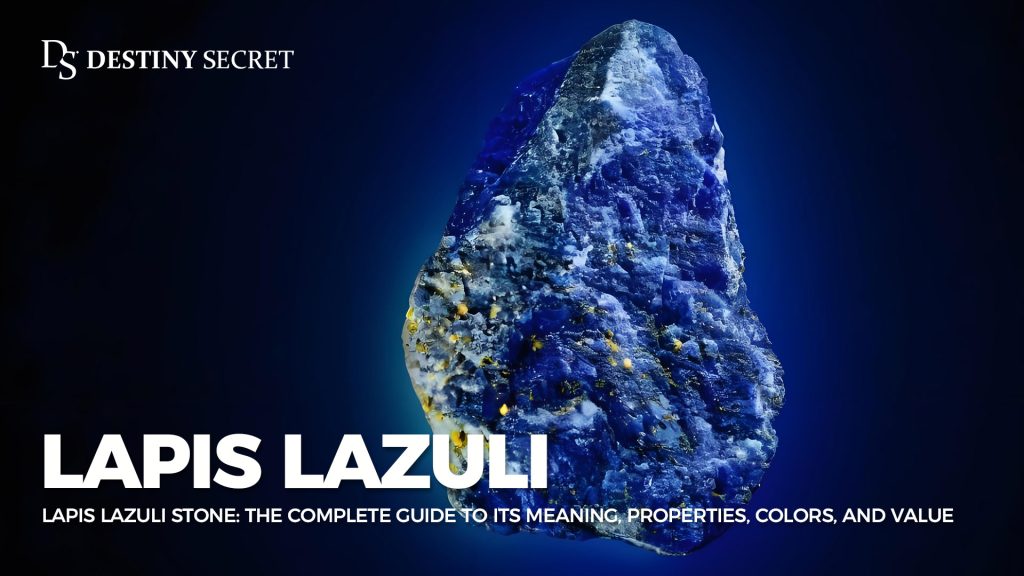
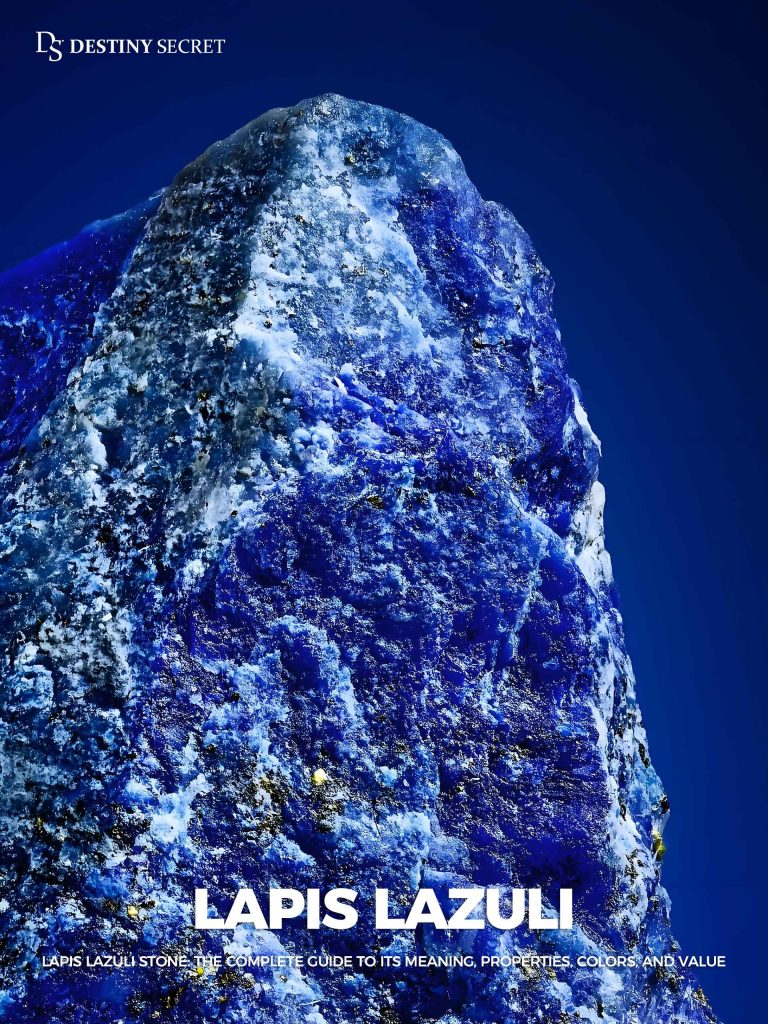
Imagine a stone so blue it seems to capture the very essence of the night sky. A stone flecked with golden pyrite, as if someone had scattered stars across a deep azure canvas. For over six thousand years, this stone—lapis lazuli—has captivated pharaohs, painters, poets, and spiritual seekers alike.
The ancient Egyptians buried their dead with lapis amulets, believing the stone would guide them through the afterlife. Renaissance painters ground it into the most expensive blue pigment the world had ever known. Tibetan healers have used it for centuries to restore balance and clarity. And today, this mesmerizing gem continues to enchant anyone who encounters its rich, celestial blue.
But what exactly makes lapis lazuli so special? Is it all the same stone, or does quality vary? What gives it that unmistakable blue color, and what do the golden flecks actually mean? And perhaps most importantly—how can you choose a genuine piece and care for it properly?
In this complete guide, we’ll answer all these questions and more. You’ll discover the geology behind lapis lazuli’s striking appearance, explore the factors that determine its quality, uncover its profound meaning across cultures and centuries, learn its traditional healing properties, and gain practical knowledge for identifying authentic stones. By the end, you’ll understand why lapis lazuli has earned its place among the world’s most treasured gems.
Table of Contents
What Is Lapis Lazuli Stone?
The Colors and Quality of Lapis Lazuli: From Deep Blue to Golden Flecks
The Meaning and Symbolism of Lapis Lazuli Across History
The Properties of Lapis Lazuli: Physical and Energetic
Lapis Lazuli Value, Quality, and How to Identify Genuine Stone
Where Is Lapis Lazuli Found? A Guide to Major Sources
How to Use and Care for Your Lapis Lazuli Jewelry
Frequently Asked Questions About Lapis Lazuli Stone
Research and References
Conclusion: The Eternal Blue of Lapis Lazuli
Explore Our Lapis Lazuli Bracelets
1. What Is Lapis Lazuli Stone?
Lapis lazuli is one of the oldest known gemstones in human history, prized for its intense, celestial blue color and its striking golden pyrite inclusions. But unlike many gemstones that consist of a single mineral, lapis lazuli is actually a rock—a metamorphic rock composed of several minerals working together to create its signature appearance.
The Composition of Lapis Lazuli
Lapis lazuli primarily consists of three key minerals:
Lazurite (25–40%): This is the mineral responsible for lapis lazuli’s characteristic blue color. Lazurite belongs to the sodalite group of minerals and contains sulfur, which gives the stone its deep, rich blue hues. The more lazurite present, the more intense the color.
Pyrite (5–15%): These are the golden flecks that often appear throughout the stone. Pyrite is iron sulfide, and its metallic, brassy yellow creates a striking contrast against the deep blue background. In high-quality lapis, pyrite appears as fine, even specks rather than large, chunky patches.
Calcite (10–40%): Calcite appears as white veins or patches within the stone. While a small amount of calcite is unavoidable, too much calcite diminishes the stone’s value. The finest lapis lazuli has little to no visible calcite.
Other minerals that may appear in smaller quantities include diopside, amphibole, and various feldspars. The exact combination of these minerals determines the stone’s overall appearance and quality.
A Rock, Not a Single Mineral
This compositional complexity sets lapis lazuli apart from many other gemstones. Unlike diamonds (pure carbon) or sapphires (corundum), lapis lazuli is a rock—a naturally occurring aggregate of multiple minerals. This means no two pieces are exactly alike, and the interplay between lazurite, pyrite, and calcite gives each stone its unique character.
The Name's Ancient Origins
The name “lapis lazuli” has a fascinating etymology. “Lapis” is the Latin word for “stone,” while “lazuli” comes from the Persian lāžward, meaning “blue.” The same Persian word gave us “azure” and “azul” in various languages. So lapis lazuli literally translates to “blue stone”—a fitting name for a gem so deeply associated with the color blue.
Interestingly, the medieval Latin term lapis lazuli replaced the earlier Latin name sapphirus, which originally referred to lapis lazuli before later becoming associated with the blue corundum we now call sapphire.
Is Lapis Lazuli a Precious Stone?
In traditional gemology, lapis lazuli is classified as a semi-precious gemstone, though this designation does little justice to its historical and cultural importance. For thousands of years, lapis lazuli has been valued as highly as any precious stone. The ancient Egyptians used it alongside gold, and Renaissance painters paid fortunes for ultramarine pigment made from ground lapis. In terms of cultural significance, lapis lazuli stands among the most treasured materials in human history.
2. The Colors and Quality of Lapis Lazuli: From Deep Blue to Golden Flecks
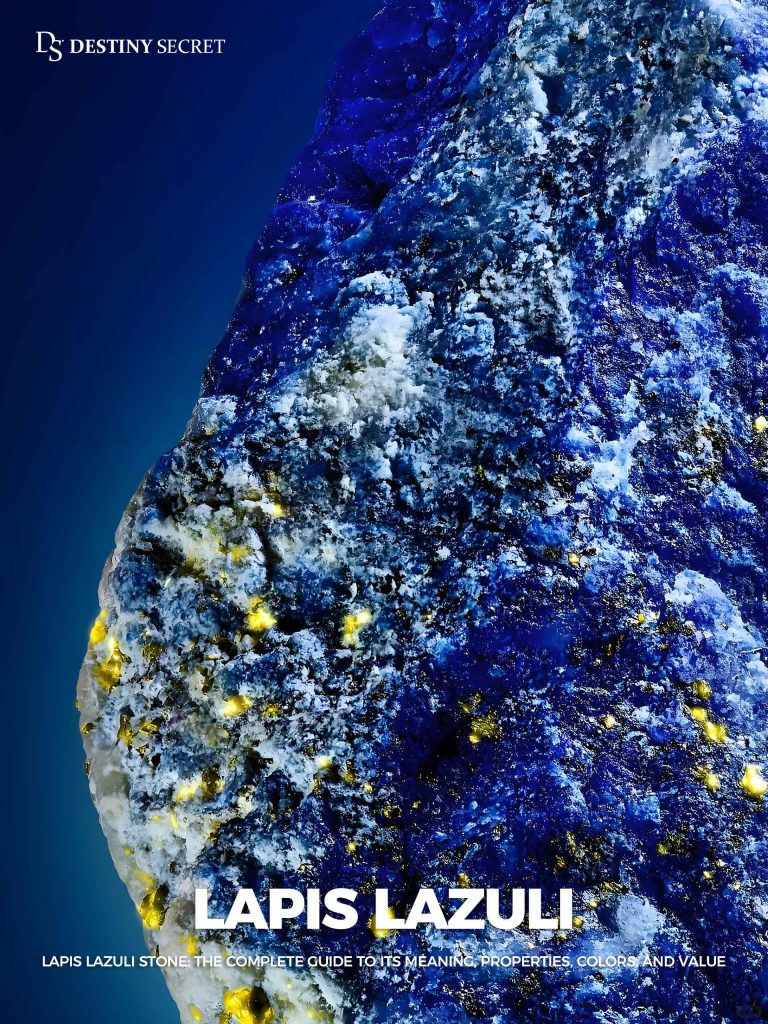
The beauty of lapis lazuli lies in the interplay between its deep blue color, its golden pyrite flecks, and its relative freedom from white calcite veins. Understanding these three factors is essential for appreciating and selecting fine-quality lapis.
The Blue: Lazurite's Gift
The most important factor in lapis lazuli’s appearance is its blue color, which comes from lazurite. The finest lapis lazuli exhibits a rich, deep, intense blue—often described as “royal blue” or “ultramarine.” This color should be as uniform as possible across the stone, with no gray or green undertones.
The most sought-after shade is sometimes called “Persian blue,” named after the historic sources in Afghanistan. This is a pure, vibrant blue that seems to glow from within. Stones with pale, washed-out, or uneven blue are considerably less valuable.
The Pyrite: Golden Stars
The golden pyrite inclusions are one of lapis lazuli’s most distinctive features. In high-quality stones, pyrite appears as fine, evenly distributed specks that resemble stars scattered across a night sky. These subtle flecks add depth and character without overwhelming the blue.
Lower-quality lapis may have pyrite that appears as large, chunky patches or uneven concentrations that distract from the blue. Some very fine lapis has almost no visible pyrite, though many collectors prefer the classic “star-dusted” appearance.
The Calcite: The White Veins
Calcite is generally considered an undesirable inclusion in lapis lazuli. It appears as white veins or cloudy patches that disrupt the stone’s uniform blue appearance. The finest lapis lazuli has little to no visible calcite.
However, because lapis is a rock composed of multiple minerals, some calcite is almost always present. The key is finding stones where the calcite is minimal or, if present, appears in subtle, non-intrusive patterns.
Quality Grades of Lapis Lazuli
The gemstone trade generally recognizes several quality grades for lapis lazuli:
| Grade | Blue Color | Pyrite | Calcite | Value |
|---|---|---|---|---|
| AAA (Top Grade) | Deep, intense, uniform royal blue | Fine, even, subtle specks | None or virtually none | Highest |
| AA (High Grade) | Rich blue, good uniformity | Even, attractive speckling | Minimal, not distracting | High |
| A (Good Grade) | Medium blue, some variation | Moderate, may be uneven | Some visible calcite | Moderate |
| B (Commercial Grade) | Lighter or uneven blue | Patchy or heavy | Noticeable white veins | Low |
| C (Low Grade) | Pale or greenish-blue | Minimal or absent | Extensive calcite | Lowest |
Denim Lapis and Other Variations
In recent years, “denim lapis” has become popular in the jewelry market. This term refers to lighter blue lapis lazuli with a softer, more casual appearance—reminiscent of blue jeans. Denim lapis typically contains more calcite and less pyrite than higher grades, giving it a distinctive, muted look. While less valuable than deep royal blue lapis, denim lapis has found a following among those who prefer its subtle, everyday elegance.
3. The Meaning and Symbolism of Lapis Lazuli Across History
Few gemstones carry as rich and layered a history as lapis lazuli. For over six thousand years, across civilizations that never had contact with one another, this deep blue stone has been associated with royalty, divinity, wisdom, and truth.
Ancient Egypt: The Stone of the Gods
The ancient Egyptians prized lapis lazuli above almost any other material. They called it khesbed and used it extensively in jewelry, amulets, and funerary art. The stone’s deep blue color, reminiscent of the night sky, connected it to the heavens and the gods.
Lapis lazuli appears prominently in the treasures of Tutankhamun, including the famous death mask, which features lapis inlay in the eyebrows and around the eyes. The Egyptians believed lapis would protect the dead in the afterlife and guide them through the underworld.
The stone was also associated with ma’at—the concept of truth, justice, and cosmic order. Egyptian judges wore lapis amulets, believing the stone would help them discern truth from falsehood.
Mesopotamia and Persia: Royal Blue
In ancient Mesopotamia (modern-day Iraq and Iran), lapis lazuli was equally treasured. The famous Standard of Ur, a 4,500-year-old Sumerian artifact, features intricate lapis inlay depicting scenes of war and peace. Lapis was used in cylinder seals, jewelry, and religious objects.
The Persian word lāžward (blue) gave lapis its name and reflected the stone’s association with royalty and nobility. Persian lapis mines, particularly in what is now Afghanistan, supplied the ancient world for millennia.
The Renaissance: The Most Expensive Blue
During the Renaissance, lapis lazuli took on a new role: pigment. Ground into a fine powder and processed into ultramarine pigment, lapis became the most expensive blue available—more costly than gold. Only the wealthiest patrons could afford paintings that featured ultramarine, and artists reserved it for the most important subjects: the robes of the Virgin Mary, the heavens, and divine figures.
Artists like Titian, Vermeer, and the young Johannes Vermeer used ultramarine to create luminous blues that have survived centuries without fading. The very name “ultramarine” means “beyond the sea,” reflecting the long journey lapis made from Afghan mines to European workshops.
Tibetan and Himalayan Traditions: Healing and Wisdom
In Tibetan Buddhism, lapis lazuli is known as the “Stone of Wisdom.” It is associated with the Medicine Buddha, whose skin is depicted as deep blue. Traditional Tibetan medicine incorporates lapis lazuli for its supposed healing properties, particularly for disorders of the throat and thyroid.
Lapis is also considered a stone of clarity and truth in Tibetan tradition. Monks and spiritual practitioners use it to clear the mind, deepen meditation, and access inner wisdom.
Modern Meaning: Truth, Wisdom, and Communication
Today, lapis lazuli carries forward many of these ancient associations. It is widely regarded as:
The Stone of Truth: Lapis is believed to encourage honesty, authenticity, and clear communication. It helps one speak their truth and hear the truth of others.
The Wisdom Stone: Associated with intellect and knowledge, lapis is thought to stimulate the mind, enhance memory, and promote clarity of thought.
The Royal Blue Stone: Lapis retains its ancient connection to royalty and nobility, symbolizing dignity, power, and self-expression.
A Stone of Protection: Like the Egyptians who placed it in tombs, many today carry lapis for protection against negative energies and psychic harm.
Modern Associations
In contemporary crystal healing, lapis lazuli is the birthstone for September (along with sapphire) and the traditional gift for the 7th and 9th wedding anniversaries. It remains one of the most popular stones for meditation, spiritual work, and jewelry.
4. The Properties of Lapis Lazuli: Physical and Energetic
Physical Properties: Understanding Your Stone
Knowing the physical properties of lapis lazuli helps you appreciate its unique character and care for it properly.
| Property | Value |
|---|---|
| Rock Composition | Metamorphic rock composed of lazurite, pyrite, calcite, and other minerals |
| Mineral Class (Lazurite) | Sodalite group (feldspathoid) |
| Crystal System (Lazurite) | Isometric (cubic) |
| Color | Deep blue to violet-blue, often with golden pyrite flecks and white calcite veins |
| Luster | Vitreous to dull (depending on polish and calcite content) |
| Transparency | Opaque to translucent in thin sections |
| Mohs Hardness | 5 to 5.5 (varies with composition) |
| Specific Gravity | 2.7 to 2.9 (varies with pyrite and calcite content) |
| Fracture | Uneven to conchoidal |
Porosity and Durability: Lapis lazuli is relatively porous compared to gemstones like quartz or jade. This means it can be sensitive to chemicals, oils, and prolonged moisture. It also has moderate hardness (5-5.5), making it durable enough for jewelry but softer than many common stones. Careful handling and cleaning are essential to preserve its beauty.
Energetic Properties: Traditional Beliefs and Crystal Healing
While not scientifically proven, lapis lazuli has carried various energetic properties across many cultures and healing traditions. Understanding these beliefs adds depth to your appreciation of the stone.
Chakra Associations:
-
Throat Chakra (Vishuddha): Lapis lazuli’s strongest association is with the throat chakra. It is believed to enhance communication, self-expression, and the ability to speak one’s truth with clarity and confidence.
-
Third Eye Chakra (Ajna): The deep blue color also connects lapis to the third eye, the center of intuition, wisdom, and spiritual insight. It is thought to open the mind to deeper understanding and expanded awareness.
Emotional and Spiritual Benefits (Traditional Beliefs):
-
Truth and Authenticity: Lapis is believed to encourage honesty, both with oneself and with others. It helps one speak from the heart and live in alignment with their values.
-
Mental Clarity: The stone is thought to stimulate the intellect, enhance memory, and cut through confusion to reveal clear truths.
-
Inner Wisdom: Lapis is said to connect the wearer to their inner knowing, promoting intuition and spiritual insight.
-
Protection: Like the Egyptians who used it in funerary art, lapis is considered a protective stone, shielding the wearer from negative energies and psychic attacks.
-
Emotional Balance: Lapis is believed to calm the mind, reduce stress, and bring emotional equilibrium, especially during times of conflict or upheaval.
Modern Perspective: At Destiny Secret,we’ve heard from many customers who feel a sense of clarity, confidence, or calm when wearing their lapis lazuli pieces. Whether these feelings come from the stone itself, the power of intention, or simply the beauty of the gem, the experience is real and meaningful to each individual.
5. Lapis Lazuli Value, Quality, and How to Identify Genuine Stone
What Determines Lapis Lazuli Value?
Several factors influence the value of lapis lazuli, with the finest pieces commanding premium prices.
1. Color Intensity
The most valuable lapis lazuli exhibits a deep, rich, vibrant blue—the classic “royal blue” or “ultramarine.” Stones with pale, grayish, or greenish undertones are less desirable. Color should be as uniform as possible across the stone.
2. Pyrite Distribution
Pyrite adds character to lapis, but quality matters. The most desirable stones have fine, evenly distributed pyrite specks that resemble golden stars. Stones with large, chunky, or uneven pyrite patches are less valuable. Some very fine lapis has almost no visible pyrite.
3. Calcite Content
Calcite (white veins or patches) is generally undesirable. The finest lapis lazuli has little to no visible calcite. Stones with noticeable white veining are considered lower quality and are typically more affordable.
4. Uniformity
High-quality lapis lazuli has a consistent appearance across the stone. Variations in color, pyrite distribution, or calcite content reduce value.
5. Origin
Lapis lazuli from Afghanistan—specifically the Badakhshan province—is historically considered the finest in the world. This region has produced lapis for over six thousand years, and its stones are renowned for their deep blue color and fine pyrite distribution. Lapis from other sources, including Chile, Russia, and Pakistan, is generally less valuable.
How to Tell If Lapis Lazuli Is Real
This is one of the most common questions about lapis lazuli. Unfortunately, lapis is frequently imitated or treated. Here’s how to spot genuine stone.
Visual Inspection:
Look for natural variations: Genuine lapis lazuli has subtle variations in color and pyrite distribution. Perfectly uniform blue with no pyrite or calcite may indicate dyeing or imitation.
Check pyrite authenticity: Real pyrite has a metallic, brassy appearance. Imitations often use glitter, gold paint, or brass filings that look too uniform or lack the natural luster of real pyrite.
Examine calcite: White calcite veins should appear natural and slightly irregular. Dyed stones may have color pooling in veins or a blue tint to the “white” areas.
Simple Tests:
Acetone Test: Rub a hidden area with a cotton swab dipped in acetone. If blue color transfers to the cotton, the stone is dyed. Test carefully on an inconspicuous spot.
Temperature Test: Real lapis lazuli feels cool to the touch initially. Plastic or resin imitations warm up quickly.
Hardness Test: Lapis lazuli (hardness 5-5.5) can be scratched with a steel knife. Imitations like dyed howlite (hardness 3-4) scratch more easily. Test carefully on an inconspicuous spot.
Common Imitations and Treatments:
| Imitation/Treatment | What It Is | How to Spot |
|---|---|---|
| Dyed Howlite | White howlite dyed blue to mimic lapis | Color pools in veins; no pyrite; often has a uniform, “plasticky” appearance |
| Dyed Jasper | Jasper dyed deep blue | No pyrite; unnatural uniformity; color may pool in cracks |
| Synthetic Lapis | Man-made material often containing plastic or resin | Too uniform; may feel lighter; can be scratched or melted |
| Reconstituted Lapis | Low-quality lapis dust bonded with resin | Usually lacks pyrite; may have a dull or plastic-like luster |
| Goldstone Imitation | Man-made glass with copper flecks | Pyrite flecks are too uniform; overall color is too bright; lacks natural texture |
The Most Important Rule: Buy from reputable sources. At Destiny Secret, every lapis lazuli piece is carefully sourced from trusted suppliers who guarantee authenticity. We believe you should never have to wonder whether your stone is real.
6. Where Is Lapis Lazuli Found? A Guide to Major Sources
Lapis lazuli deposits are limited worldwide, with one source dominating the market for millennia.
| Country/Region | Notable Sources | Characteristics |
|---|---|---|
| Afghanistan | Badakhshan province (Sary-Sang mines) | World’s oldest and most important source. Produces the finest quality lapis—deep royal blue with fine pyrite distribution. Mines have operated continuously for over 6,000 years. |
| Chile | Ovalle (Andes mountains) | Major modern producer. Chilean lapis often has a slightly greener or more violet-blue color. Typically contains more calcite than Afghan material. |
| Russia | Baikal region (Siberia) | Produces lapis with distinctive characteristics. Often deeper blue with pyrite, but generally considered lower quality than Afghan material. |
| Pakistan | Various | Smaller deposits producing lapis with varying quality. Often similar to Afghan material geologically. |
| United States | California, Colorado | Minor deposits; generally not commercial-scale production. |
| Myanmar (Burma) | Various | Limited production; lapis from this region is rare. |
Note on Afghan Lapis: The mines in Badakhshan, Afghanistan, are the world’s oldest known lapis lazuli sources. They have produced lapis continuously for over six thousand years, supplying ancient Egypt, Mesopotamia, Persia, and later Europe. Afghan lapis remains the standard by which all other lapis is judged.
7. How to Use and Care for Your Lapis Lazuli Jewelry
Lapis lazuli is moderately durable (hardness 5-5.5) but requires more careful handling than harder stones like quartz or jade. Follow these guidelines to keep your lapis pieces looking their best.
How to Use Lapis Lazuli for Wisdom and Communication
Beyond wearing it as jewelry, you can use lapis lazuli in various ways:
Wear it near the throat: A pendant or necklace positions the stone over the throat chakra, supporting clear communication.
Meditate with it: Hold a piece of lapis lazuli during meditation to quiet the mind and access inner wisdom.
Place it on your desk: Keep lapis on your workspace to promote mental clarity and truthful communication.
Create a crystal grid: Combine lapis with other stones like clear quartz or sodalite for enhanced clarity and truth.
Use in journaling: Hold lapis while journaling to encourage honest self-expression.
Do's and Don'ts of Lapis Lazuli Care
✅ DO:
Clean gently with a soft, damp cloth. Use mild soap if necessary, then wipe with a clean damp cloth and dry thoroughly.
Store separately in a fabric-lined jewelry box or soft pouch to prevent scratching by harder gems.
Remove jewelry before applying perfumes, lotions, hairsprays, or cosmetics.
Take off lapis rings and bracelets before washing hands, swimming, or doing housework.
Protect from heat and prolonged direct sunlight, which can cause color fading.
❌ DON’T:
Never use ultrasonic or steam cleaners – these can crack or damage the stone.
Avoid harsh chemicals – including bleach, ammonia, and jewelry cleaning solutions.
Don’t soak lapis lazuli in water or any liquid. Its porosity makes it vulnerable to moisture.
Avoid prolonged perspiration – body oils and sweat can penetrate porous stones over time.
Don’t expose to extreme heat or sudden temperature changes.
Special Considerations
Wear with care: Because lapis lazuli is softer than many gems, avoid wearing it during activities that might cause impact or abrasion.
Check settings: Periodically check prongs and bezels to ensure your stone is secure.
Avoid contact with other gemstones: Store lapis separately to prevent scratching by harder stones like quartz, topaz, or diamond.
8. Frequently Asked Questions About Lapis Lazuli Stone
What is lapis lazuli stone good for?
Lapis lazuli is traditionally used for truth, wisdom, and clear communication. It’s also valued for mental clarity, spiritual insight, and protection. Many use it for throat chakra work and meditation.
What color is lapis lazuli stone?
The finest lapis lazuli is a deep, rich royal blue or ultramarine blue. It often contains golden pyrite flecks and may have white calcite veins. Lower-quality lapis may appear lighter or have greenish undertones.
Is lapis lazuli a precious stone?
Lapis lazuli is technically classified as a semi-precious gemstone, though historically it has been valued as highly as precious stones. For millennia, it was more expensive than gold in some cultures.
How can you tell if lapis lazuli is real?
Look for natural variations in color, genuine pyrite flecks with metallic luster, and natural-looking calcite veins. Perform an acetone test on a hidden area to check for dye. Buy from reputable sources.
What is the difference between lapis lazuli and sodalite?
Sodalite is a separate mineral that often appears similar to lapis but lacks pyrite flecks. Sodalite is typically lighter blue and often has white veins that are more prominent than in lapis. Lapis lazuli contains lazurite, pyrite, and calcite.
What is denim lapis?
Denim lapis is a lighter blue variety of lapis lazuli with a softer, more casual appearance. It typically contains more calcite and less pyrite than higher-grade lapis.
How much is lapis lazuli worth?
Lapis lazuli value varies widely. Common grade lapis can be quite affordable, while top-grade Afghan lapis with deep blue color and fine pyrite distribution can command premium prices. Origin, color, and pyrite distribution all affect value.
Where is lapis lazuli found?
The most famous and historically important source is Afghanistan (Badakhshan province). Other sources include Chile, Russia, Pakistan, and the United States. Afghan lapis is generally considered the finest.
What does lapis lazuli symbolize?
Lapis lazuli symbolizes truth, wisdom, royalty, and spiritual insight. Historically, it was associated with the gods, justice, and divine connection.
How do you clean lapis lazuli jewelry?
Clean gently with a soft, damp cloth. Use mild soap if necessary, then wipe with a clean damp cloth and dry thoroughly. Never use ultrasonic cleaners, steamers, or harsh chemicals.
9. Research and References
This guide draws upon multiple authoritative sources in the fields of gemology, mineralogy, archaeology, and cultural history:
Gemological Institute of America (GIA). “Lapis Lazuli.” GIA Gem Encyclopedia, 2023.
Mindat.org. “Lazurite: Mineral Information, Data and Localities.” 2023.
International Gem Society (IGS). “Lapis Lazuli Value, Price, and Information.” 2023.
Geology.com. “Lapis Lazuli: A blue gem material with a rich history.” Hobart M. King, PhD.
British Museum. “Lapis Lazuli in Ancient Egypt.” Research Publication, 2022.
Metropolitan Museum of Art. “Ultramarine: The Most Expensive Blue.” Exhibition Notes, 2021.
Hall, Judy. “The Crystal Bible: A Definitive Guide to Crystals.” Walking Stick Press, 2003.
Simmons, Robert & Ahsian, Naisha. “The Book of Stones: Who They Are and What They Teach.” North Atlantic Books, 2015.
Smithsonian National Museum of Natural History. “Gemstones of the Ancient World.” Collection Guide, 2023.
Gem-A (Gemological Association of Great Britain). “The Lapis Lazuli Mines of Badakhshan.” Research Publication, 2023.
10. Conclusion: The Eternal Blue of Lapis Lazuli
As we’ve discovered, lapis lazuli is far more than just a beautiful blue stone. It’s a gem with one of the longest and most distinguished histories of any material on Earth. From the tombs of Egyptian pharaohs to the paintings of Renaissance masters, from the spiritual traditions of Tibet to the royal courts of Persia, lapis lazuli has been cherished, traded, and revered for over six thousand years.
Its appeal is both timeless and universal. The deep, celestial blue—so rare in nature—captures something essential in the human spirit. The golden pyrite flecks, like stars scattered across a night sky, add a touch of magic. And the meaning behind it all—truth, wisdom, clarity, protection—speaks to desires we all share.
Whether you’re drawn to lapis lazuli as a stone of spiritual insight, a tool for clear communication, a piece of living history, or simply because its beauty moves you, you’re participating in a tradition that spans millennia. The next time you hold a piece of lapis lazuli, you’re not just holding a stone—you’re holding a piece of human civilization, a symbol of truth, and a connection to the heavens that has inspired humanity for thousands of years.
11. Explore Our Lapis Lazuli Bracelets
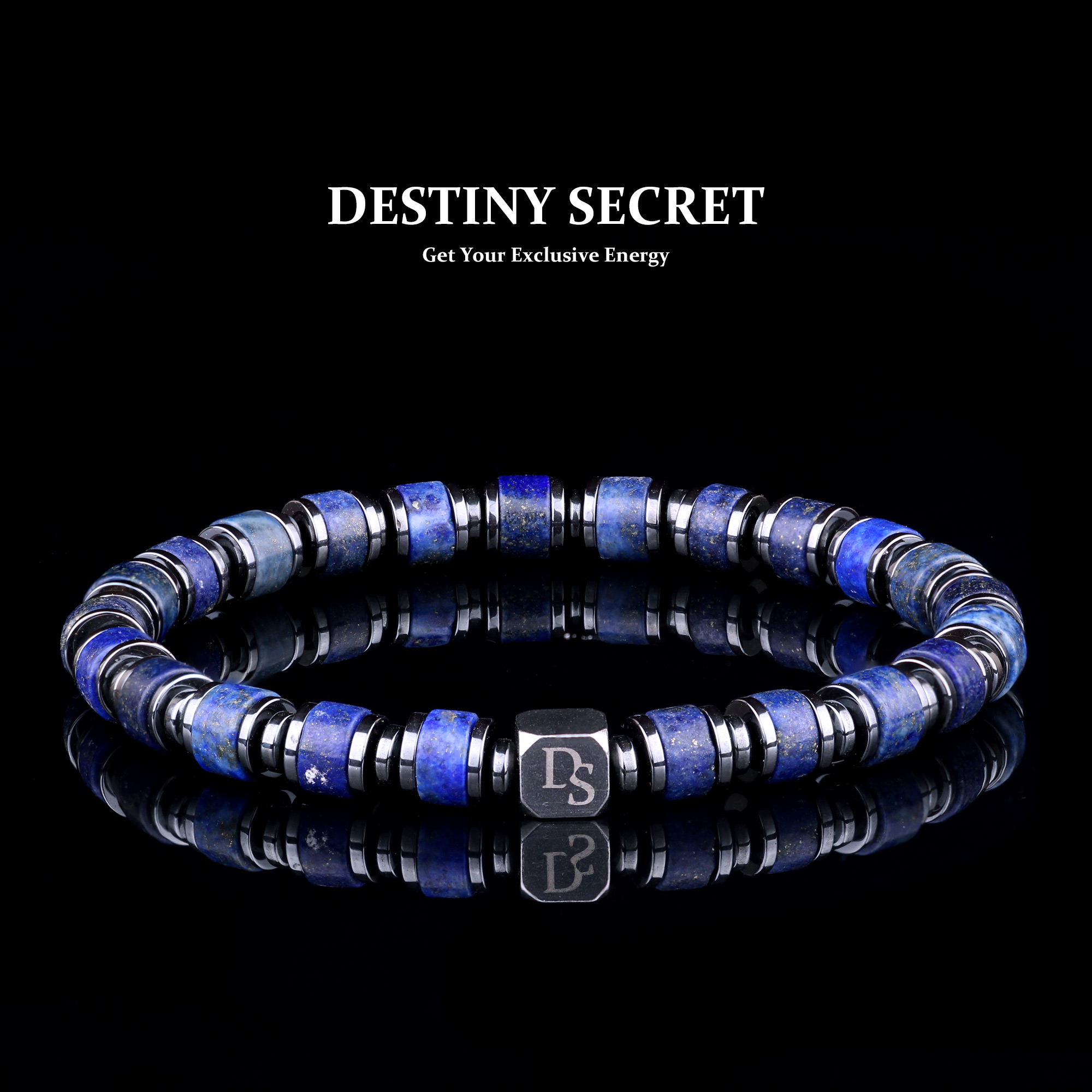
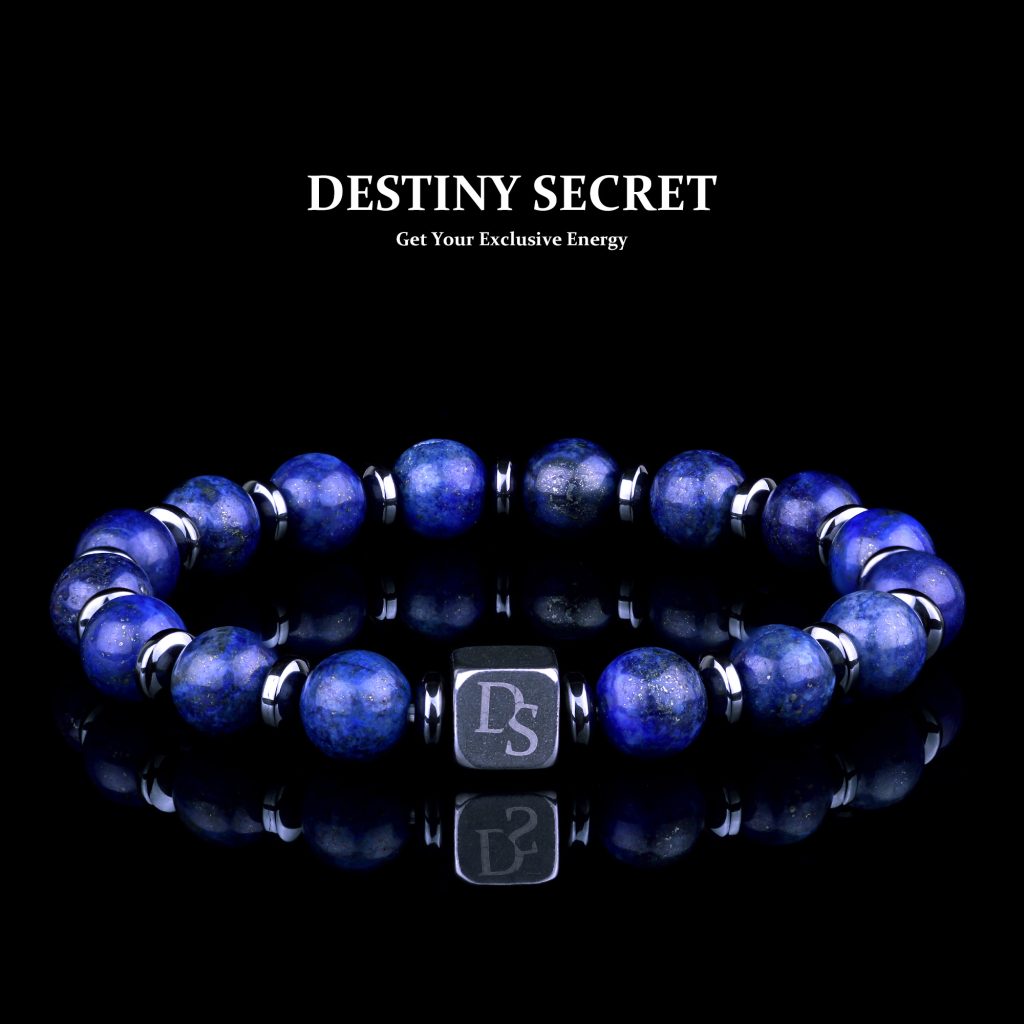
If this guide has deepened your appreciation for lapis lazuli, you might be interested in experiencing its timeless beauty firsthand. At Destiny Secret, we carry a carefully curated selection of genuine lapis lazuli bracelets, each piece chosen for its quality, color, and character.
From deep royal blue Afghan lapis with subtle golden pyrite flecks to lighter denim lapis for everyday elegance, our collection showcases the full spectrum of this remarkable stone. Each bracelet is handcrafted with care, honoring the traditions that have made lapis lazuli beloved for millennia.
Visit our Lapis Lazuli Bracelets page to explore the collection. Whether you’re seeking a stone of wisdom, a tool for clearer communication, or simply a beautiful piece of jewelry with a rich history, you’ll find lapis lazuli pieces that resonate with your journey and connect you to the eternal blue of the heavens.