
What is the February gemstone? The answer resonates with a serene and regal purple hue: the Amethyst. As the sole traditional birthstone for February, this captivating variety of quartz has been cherished for millennia as a stone of peace, spiritual wisdom, and protective clarity. This comprehensive guide explores the tranquil world of the February birthstone Amethyst, from its ancient myths and royal associations to its modern role as a cornerstone of crystal healing. Whether you’re a February native or drawn to its soothing violet energy, you’ll discover how to select an Amethyst that enhances calm, intuition, and personal harmony.
Individuals often seek the February gemstone for its beautiful color and profound calming properties. You might desire a stone that quiets a busy mind, enhances spiritual connection, or provides a protective barrier against negative energy. We will delve into the geology of Amethyst, explaining how iron impurities and natural irradiation create its distinctive purple color, and explore the fascinating lore that has made it a favorite of royalty and clergy alike. Furthermore, we provide a clear, practical framework to help you evaluate Amethyst quality, understand its value, and choose a piece whose vibration aligns with your intention for peace and personal growth.
Table of Contents
The February Gemstone: An Introduction to Amethyst
Amethyst History: From Bacchus to Bishops
The Symbolic Meaning and Energy of the February Birthstone
Understanding Amethyst Colors and Quality
Amethyst and Zodiac Connections: Aquarius and Pisces
How to Choose Your Meaningful February Gemstone
Cleansing and Caring for Your Amethyst
Frequently Asked Questions (FAQ)
Research and References
Conclusion
1. The February Gemstone: An Introduction to Amethyst
When asking “what is the gemstone for February?” the answer is richly hued and steeped in legend: the Amethyst. A violet to purple variety of quartz, Amethyst is one of the most popular and accessible gemstones in the world, yet its beauty is no less powerful for its abundance. Its color can range from pale lilac to deep, saturated royal purple, sometimes with red and blue flashes. Historically, fine Amethyst rivaled Ruby and Emerald in value, making the February birthstone Amethyst a gem of both democratic appeal and noble heritage.
This unique position—being both widely available and historically precious—means your exploration of the February gemstone is accessible yet deeply meaningful. You are engaging with a stone that has adorned the fingers of kings and the rings of bishops, yet can be found in jewelry stores everywhere. Understanding its journey from a stone of incredible rarity to a beloved mainstay provides a wonderful foundation for selecting a gemstone for February birthday gifts or personal adornment that is both beautiful and spiritually significant.
2. Amethyst History: From Bacchus to Bishops
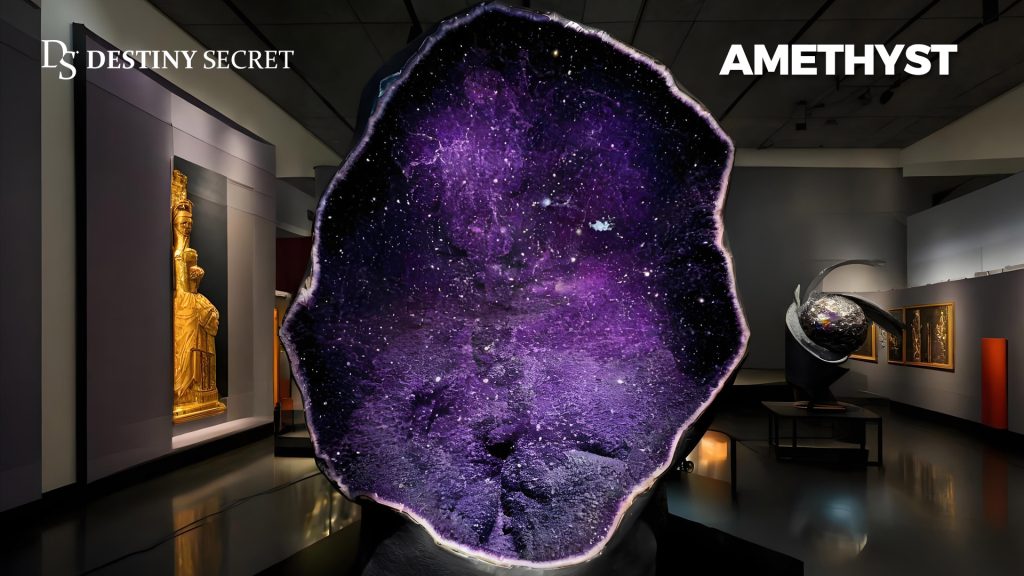
Amethyst history is a captivating blend of mythology, religion, and royalty. Its name originates from the ancient Greek word “amethystos,” meaning “not intoxicated.” A Greek myth tells of the god Bacchus (Dionysus), angered by an insult, who vowed to unleash his tigers on the next mortal he met. The young maiden Amethyst was on her way to worship the goddess Diana. To protect her, Diana turned Amethyst into a pure white quartz statue. Remorseful, Bacchus poured his wine over the statue, staining it a beautiful purple, thus creating the first Amethyst and forever linking it to sobriety and clear-headedness.
Beyond myth, Amethyst has been a stone of spiritual significance. Early Christian bishops wore Amethyst rings as a symbol of piety and celibacy, leading to its nickname, “the Bishop’s Stone.” Russian Empress Catherine the Great sent miners to Siberia specifically for Amethyst, and it was a favorite in European royal collections. For anyone seeking the meaning of the February gemstone, its dual legacy as a protector against vice and a beacon of spirituality is central to its enduring appeal.
3. The Symbolic Meaning and Energy of the February Birthstone
The February gemstone Amethyst carries a profound and cohesive set of symbolic meanings, all relating to higher consciousness and inner peace.
Stone of Spiritual Wisdom and Peace: Amethyst is preeminent among stones for meditation and spiritual growth. It is believed to calm the mind, quiet mental chatter, and enhance intuition and psychic abilities by opening and purifying the crown and third eye chakras. It promotes a state of serene, mindful awareness.
Protector Against Negativity: Historically worn to guard against drunkenness and addictive behaviors, Amethyst is considered a powerful protective stone. It is thought to create a spiritual shield around the wearer, transmuting negative energy into love and guarding against psychic attack or environmental stress.
Symbol of Sobriety and Clarity: True to its name and myth, Amethyst symbolizes sobriety in all forms—not just from substances, but from negative thoughts, excessive emotions, and unhealthy attachments. It is believed to bring clarity of thought, improve decision-making, and support emotional balance.
4. Understanding Amethyst Colors and Quality
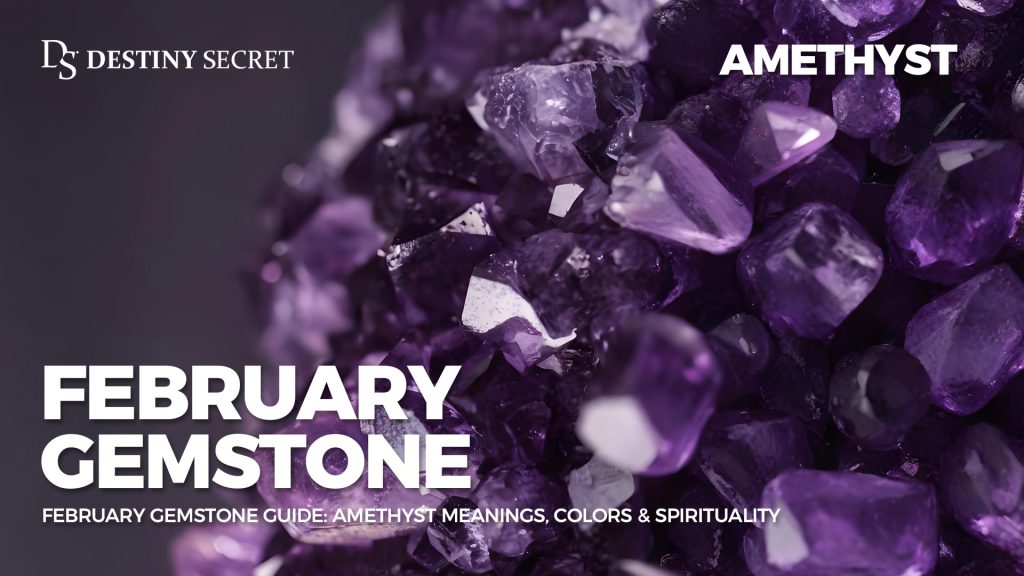
The colors of February gemstones are focused on the purple spectrum, with color being the primary factor in determining Amethyst’s beauty and value.
Color Range: The most prized color is a strong, saturated purple with rosy or violet flashes, often called “Siberian” or “Deep Russian” purple, even if not from those locales. Pale lilac stones are more common and affordable. Some Amethyst may show color zoning (lighter and darker bands).
Clarity: High-quality Amethyst is typically “eye-clean,” meaning no visible inclusions to the naked eye. Its transparency should be good, allowing light to pass through and enhance its color.
Cut: Amethyst is cut into all standard gem shapes (ovals, rounds, cushions, etc.) as well as artistic freeforms and carvings. A good cut maximizes the depth and evenness of the purple color.
Ametrine: A unique and natural variety that combines Amethyst and Citrine in a single crystal, symbolizing a blend of spiritual peace (purple) and mental clarity/abundance (yellow).
When considering “what color is February gemstone,” seek a purple that feels calming and uplifting to you personally, whether it’s a soft lavender or a deep, regal violet.
5. Amethyst and Zodiac Connections: Aquarius and Pisces
February spans two spiritually inclined zodiac signs, and the February gemstone Amethyst deeply resonates with both.
For Aquarius (Jan 20 – Feb 18): Humanitarian, intellectual, and innovative Aquarians benefit from Amethyst’s ability to calm their active minds, enhance their visionary ideas, and strengthen their intuitive connection to collective consciousness. It supports their altruistic goals with spiritual clarity.
For Pisces (Feb 19 – Mar 20): Deeply intuitive, compassionate, and dreamy Pisces find a perfect ally in Amethyst. It protects their sensitive energy, enhances their natural psychic abilities, and provides grounding for their spiritual explorations, helping to prevent overwhelm.
6. How to Choose Your Meaningful February Gemstone
Selecting your February gemstone is a journey into color and personal resonance.
Connect with the Color’s Calm: First, observe different shades of Amethyst. Which purple tone brings you a sense of peace or spiritual connection? Let your intuition guide you toward light or dark.
Evaluate for Even Color and Clarity: Next, look for a stone with rich, even color distribution and good transparency. Avoid stones with large, distracting opaque areas or heavy inclusions that block light.
Consider the Form and Purpose: Then, decide how you’ll use it. A tumbled stone for your pocket, a polished point for meditation, or a faceted gem for jewelry? Each form serves a different daily function.
Feel the Energy: Finally, hold the stone if possible. A genuine Amethyst should impart a subtle, calming sensation. Does it help quiet your thoughts or make you feel centered?
The perfect gemstone for February is an Amethyst whose color soothes your spirit and whose energy supports your quest for inner peace.
7. Cleansing and Caring for Your Amethyst
Amethyst requires specific care to maintain its color and energetic potency.
Cleaning: Clean gently with lukewarm, soapy water and a soft cloth or brush. Avoid ultrasonic and steam cleaners.
Protect from Prolonged Sunlight: Extended exposure to direct, strong sunlight can cause the purple color to fade over time. Store your Amethyst in a soft pouch or box when not wearing it.
Energetic Cleansing: Due to its role as an energy cleanser, your Amethyst needs regular clearing. Effective methods include placing it on a bed of clear quartz or selenite, smudging with sage, or leaving it in moonlight (which will not fade it). Avoid using salt.
8. Frequently Asked Questions (FAQ)
Q: What is the February gemstone?
A: The official and traditional February gemstone is Amethyst.
Q: Can Amethyst fade?
A: Yes, prolonged exposure to intense direct sunlight or heat can cause some Amethyst to lighten or fade. It’s best to store it away from sunny windows and remove it before using saunas or hot tubs.
Q: Is Amethyst an expensive birthstone?
A: High-quality, deeply colored Amethyst is very affordable compared to other precious gems, making beautiful February birthstone jewelry accessible. Its historical value was much higher when large, fine stones were rare.
Q: What is the spiritual benefit of Amethyst?
A: Spiritually, Amethyst is revered for enhancing intuition, promoting calm and meditation, providing spiritual protection, and aiding in overcoming addictive patterns or negative thoughts. It is considered a master healing stone for the mind and spirit.
Q: How can I tell if my Amethyst is real?
A: Real Amethyst will have color zoning (slight variations in purple shade), will be cool to the touch, and will not have perfect, bubble-like inclusions (which indicate glass). For valuable pieces, a certification from a gem lab is best. Its hardness (7) means it cannot be scratched by a steel knife.
9. Research and References
Gemological Institute of America (GIA) – Gem Encyclopedia entry for Amethyst.
International Gem Society (IGS) – Educational articles on Amethyst quality and history.
American Gem Trade Association (AGTA) – Official birthstone charts and information.
Smithsonian Institution – Historical data from the National Gem Collection.
Hall, Judy. The Crystal Bible. (For comprehensive details on metaphysical properties).
10. Conclusion
The February gemstone Amethyst is a gateway to tranquility and spiritual depth, a beautiful purple bridge between the earthly and the ethereal. Its history as a guardian of sobriety and a companion to mystics makes it a profoundly meaningful stone for personal growth and protection. Choosing an Amethyst is an act of self-care—a commitment to cultivating peace, clarity, and a shielded space for your inner world to flourish.
Let your February birthstone be a daily touchstone for mindfulness and a reminder of your own intuitive wisdom. Select an Amethyst that not only captures the quiet depth of winter but also serves as a personal sanctuary in stone.
If the calming energy and spiritual resonance of gemstones like Amethyst align with your path, explore how this intention is woven into mindful craftsmanship. Discover Our Curated Collection of Bracelets, where the focus is on channeling the serene and protective properties of natural stones into pieces designed for daily grounding and intention.