
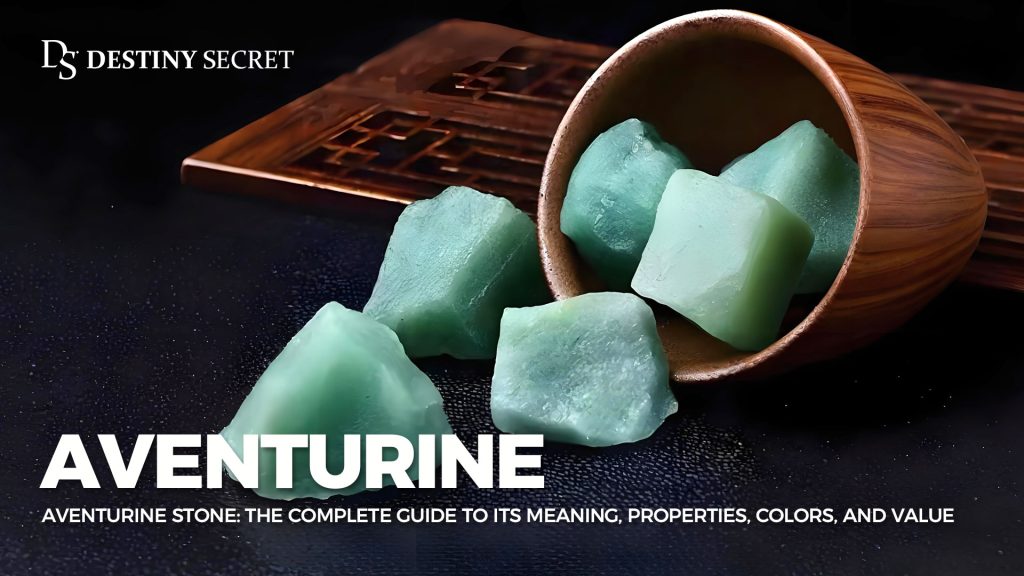
Imagine a stone that sparkles from within, as if sprinkled with tiny stars or flecks of gold. A stone that has been called the “Stone of Opportunity,” believed to attract luck, prosperity, and new possibilities to whoever wears it. That stone is aventurine—a crystal as optimistic as its name suggests.
For centuries, aventurine has been cherished not only for its distinctive shimmer but also for its powerful associations with good fortune and emotional healing. As a result, it’s a favorite among crystal enthusiasts, jewelry lovers, and anyone seeking a little extra luck in their lives.
But what exactly gives aventurine its magical sparkle? Is it all the same stone, or are there different types? What makes green aventurine so special, and what do the other colors mean? Most importantly, how can you use aventurine to invite more abundance and positivity into your life?
In this complete guide, we’ll answer all these questions and more. You’ll discover the science behind aventurine’s unique appearance, explore its stunning range of colors, uncover its profound meaning and healing properties, learn what determines its value, and gain practical knowledge for choosing and caring for genuine stones. By the end, you’ll understand why aventurine has earned its reputation as one of the most uplifting and beloved crystals in the world.
Table of Contents
What Is Aventurine Stone?
The Colors of Aventurine: From Green to Blue, Peach, and Beyond
The Meaning and Symbolism of Aventurine: The Stone of Opportunity
The Properties of Aventurine: Physical and Energetic
Aventurine Value, Quality, and How to Identify Genuine Stone
Where Is Aventurine Found? A Guide to Major Sources
How to Use and Care for Your Aventurine Jewelry
Frequently Asked Questions About Aventurine Stone
Research and References
Conclusion: Embracing the Lucky Energy of Aventurine
Explore Our Aventurine Bracelets
1. What Is Aventurine Stone?
Aventurine is a variety of quartz, one of the most abundant minerals on Earth, but with a special feature that sets it apart: a sparkling effect known as aventurescence.
The Science of Aventurine
Chemically, aventurine is a form of silicon dioxide (SiO₂), just like amethyst, citrine, and many other popular gemstones. However, what makes it unique is the presence of tiny, platy mineral inclusions—most commonly fuchsite (a green chromium-rich mica) or hematite (an iron oxide).
These microscopic inclusions are aligned in such a way that they reflect light, creating a glistening, shimmering effect that seems to come from within the stone. This effect is aventurescence, and it’s the defining characteristic of aventurine.
Unlike the flash of opal or the brilliance of diamond, aventurine’s sparkle is softer and more diffused—like sunlight dancing on water or the glitter of gold dust scattered across a surface. Consequently, this gentle, optimistic glow has made aventurine a favorite for centuries.
Quartz Family Connections
As a member of the massive quartz family, aventurine shares many properties with its crystalline cousins. It has the same hardness (around 7 on the Mohs scale), making it durable enough for everyday wear. It has the same conchoidal fracture pattern when broken. Moreover, like other cryptocrystalline quartz varieties, it’s typically opaque to translucent rather than transparent.
However, while clear quartz is prized for its clarity and amethyst for its purple hue, aventurine is prized for its sparkle—that internal glitter which catches the eye and the imagination.
The Name's Italian Origin
The name “aventurine” has a charming origin story. It comes from the Italian “a ventura,” meaning “by chance” or “by accident.” According to legend, Venetian glassmakers in the 18th century accidentally dropped copper filings into molten glass, creating a sparkling material they called avventurino. Later, when a similar-looking quartz was discovered, it inherited the name—even though the stone is entirely natural and the glass was the imitation.
Today, the term “aventurine” refers to the natural quartz, while “aventurine glass” or “goldstone” refers to the man-made imitation. Therefore, this distinction matters greatly for collectors and crystal enthusiasts.
Is Aventurine a Precious Stone?
In traditional gemology, aventurine falls into the semi-precious gemstone category. It’s generally more affordable than precious stones like diamonds, rubies, or sapphires, so it remains accessible to a wide range of collectors and jewelry lovers.
Nevertheless, its beauty and metaphysical reputation are anything but ordinary. Fine-quality aventurine—with rich color and abundant aventurescence—attracts high demand and can command respectable prices. Similarly, in the world of crystal healing, aventurine ranks among the most important and powerful stones available.
2. The Colors of Aventurine: From Green to Blue, Peach, and Beyond
While green aventurine is the most famous variety, this delightful stone actually comes in a rainbow of colors, each with its own unique beauty and energy.
What Causes Aventurine's Colors?
The color of aventurine depends entirely on the type of mineral inclusions present:
-
Green Aventurine: The most common color, green comes from inclusions of fuchsite, a chromium-rich mica. The intensity of green can vary from pale, almost minty shades to deep, rich forest green.
-
Blue Aventurine: A rarer and highly prized variety, blue aventurine derives its color from inclusions of dumortierite, a blue aluminum borosilicate mineral.
-
Red/Brown Aventurine: These warm hues come from inclusions of hematite or goethite, both iron oxides. The sparkle in these stones often exhibits a coppery or golden quality.
-
Peach and Yellow Aventurine: These softer colors are typically caused by inclusions of muscovite mica or other minerals, often with a delicate, subtle aventurescence.
Green Aventurine: The Classic Stone of Luck
Green aventurine is by far the most abundant and popular variety. Its color ranges from pale, translucent green to deep, opaque forest green. The finest specimens feature a rich, even color combined with abundant aventurescence—the sparkle should be visible throughout the stone, not just in isolated patches.
This stone is most commonly associated with luck, prosperity, and heart chakra healing. As such, it’s the aventurine you’ll find most often in jewelry, tumble stones, and crystal collections.
Blue Aventurine: Rarity and Communication
Blue Aventurine is much rarer than green and consequently more valuable. Its color can range from soft, misty blue to deeper, more saturated tones. The aventurescence in blue aventurine is often subtler than in green varieties, giving the stone a serene, ethereal quality.
In the crystal healing world, blue aventurine is associated with the throat chakra and communication, making it a powerful stone for self-expression and speaking one’s truth.
Red and Brown Aventurine: Vitality and Grounding
Red aventurine, sometimes called “strawberry aventurine” when it has a pinkish-red hue, is associated with vitality, energy, and the root chakra. Its warm, grounding energy is believed to stimulate creativity and passion.
Brown aventurine, with its earthy tones, is deeply grounding and stabilizing. People often use it for connecting with the Earth’s energy and finding balance in chaotic situations.
Peach and Yellow Aventurine: Optimism and Clarity
Peach aventurine carries a gentle, nurturing energy. Its soft, warm color is associated with emotional healing, comfort, and self-love. Yellow aventurine, sometimes called “golden aventurine,” is rarer and connected to the solar plexus chakra, promoting confidence, personal power, and optimism.
Adventurescent Quality: The Sparkle Factor
Regardless of color, the quality of aventurescence is a key factor in a stone’s beauty and value. The sparkle should be:
Evenly distributed throughout the stone, not concentrated in one spot
Visible from multiple angles as you move the stone
Natural-looking—not too sparse or overwhelmingly dense
Stones with exceptional aventurescence are sometimes called “sunstone aventurine” or given trade names highlighting their sparkle. Collectors particularly prize these specimens.
3. The Meaning and Symbolism of Aventurine: The Stone of Opportunity
Aventurine carries one of the most optimistic and uplifting meanings of any crystal. Its very name, derived from “by chance,” hints at its association with luck, opportunity, and fortunate accidents.
The Stone of Opportunity
The most enduring nickname for aventurine is the “Stone of Opportunity.” It’s believed to align circumstances in the wearer’s favor, opening doors to new possibilities and attracting chances for growth and success.
This isn’t about passive luck—winning the lottery or finding money on the street. Rather, aventurine is thought to help you recognize opportunities when they appear and have the courage to pursue them. It’s a stone for entrepreneurs, job seekers, students, and anyone standing at a crossroads in life.
Luck and Prosperity
Green aventurine, in particular, is strongly associated with luck and abundance. In many traditions, people carry it as a talisman for good fortune, especially in financial matters. Gamblers have been known to keep a piece of aventurine in their pocket, and business owners might place it near the cash register or on their desk.
This connection to prosperity isn’t just about money—it’s about abundance in all forms: opportunities, relationships, creativity, and personal growth.
Heart Healing and Emotional Balance
Beyond its lucky reputation, aventurine is known as a powerful heart healer. Green aventurine, with its connection to the heart chakra, is believed to:
Soothe emotional wounds and past traumas
Encourage compassion and empathy
Promote emotional resilience and stability
Help release old patterns that no longer serve you
For those going through heartbreak, grief, or emotional turmoil, aventurine is often recommended as a gentle, comforting companion.
Optimism and Positive Outlook
Perhaps aventurine’s greatest gift is its ability to shift perspective. It’s said to dissolve pessimism, worry, and anxiety, replacing them with a more optimistic, hopeful outlook on life. The stone’s cheerful sparkle seems to mirror this energy—it literally glitters with positivity.
Different Colors, Different Meanings
While all aventurine shares these core qualities, different colors have their own symbolic nuances:
| Color | Primary Associations |
|---|---|
| Green | Luck, prosperity, heart healing, emotional balance, growth |
| Blue | Communication, self-expression, throat chakra, calm clarity |
| Red | Vitality, passion, creativity, root chakra, grounding |
| Peach | Emotional comfort, self-love, nurturing, gentle healing |
| Yellow | Confidence, personal power, solar plexus, optimism |
Modern Relevance
In our fast-paced, often stressful modern world, aventurine’s meaning feels more relevant than ever. Who couldn’t use a little more luck, a little more optimism, a little more emotional balance? Whether you believe in its metaphysical properties or simply appreciate its beautiful sparkle, wearing aventurine can serve as a daily reminder to stay open to possibilities, trust in the journey, and expect good things to come.
4. The Properties of Aventurine: Physical and Energetic
Physical Properties: Understanding Your Stone
Knowing the physical properties of aventurine helps you appreciate its unique character and care for it properly.
| Property | Value |
|---|---|
| Chemical Formula | SiO₂ (silicon dioxide) with mineral inclusions |
| Mineral Class | Quartz (macrocrystalline variety) |
| Crystal System | Trigonal (microcrystalline) |
| Color | Green, blue, red, brown, peach, yellow |
| Luster | Vitreous (glassy) to waxy |
| Transparency | Opaque to translucent |
| Mohs Hardness | 6.5 to 7 |
| Specific Gravity | 2.64 to 2.69 |
| Fracture | Conchoidal to uneven |
| Special Effect | Aventurescence (sparkle from mineral inclusions) |
Aventurescence Explained: The sparkling effect occurs when light reflects off the platy mineral inclusions within the stone. The size, density, and orientation of these inclusions determine how pronounced the effect becomes. The best aventurine has an even distribution of sparkle throughout the stone.
Energetic Properties: Traditional Beliefs and Crystal Healing
While not scientifically proven, aventurine has carried various energetic properties across many cultures and healing traditions. Understanding these beliefs adds depth to your appreciation of the stone.
Chakra Associations:
-
Green Aventurine: Heart Chakra (Anahata) – love, compassion, emotional balance
-
Blue Aventurine: Throat Chakra (Vishuddha) – communication, self-expression
-
Red/Brown Aventurine: Root Chakra (Muladhara) – grounding, stability, vitality
-
Yellow Aventurine: Solar Plexus Chakra (Manipura) – confidence, personal power
Emotional and Spiritual Benefits (Traditional Beliefs):
-
Attracting Luck: Aventurine is believed to align circumstances in the wearer’s favor, attracting opportunities and good fortune.
-
Emotional Healing: The stone is thought to soothe emotional wounds, release old patterns, and promote resilience.
-
Prosperity: Green aventurine, in particular, is associated with abundance and financial luck.
-
Optimism: Aventurine is said to dissolve pessimism and anxiety, replacing them with a positive, hopeful outlook.
-
Heart Opening: It encourages compassion, empathy, and the ability to give and receive love freely.
-
Decision Making: By calming the mind and promoting clarity, aventurine is believed to support better decision-making.
Modern Perspective: At Destiny Secret, we’ve heard from many customers who feel a genuine sense of optimism, calm, or renewed hope when wearing their aventurine pieces. Whether these feelings come from the stone itself, the power of intention, or simply the beauty of the crystal, the experience is real and meaningful to each individual.
5. Aventurine Value, Quality, and How to Identify Genuine Stone
What Determines Aventurine Value?
Several factors influence the value of aventurine, with the finest pieces commanding premium prices.
1. Color
Color is the most important factor. For green aventurine, the most valuable stones have a rich, even, medium-to-deep green without gray or brown undertones. The color should be consistent throughout the stone.
For blue aventurine, rarity makes it more valuable than common green varieties. Deep, saturated blue with good aventurescence is particularly prized.
For all colors, intensity and evenness are key. Pale, washed-out stones are less valuable.
2. Aventurescence
The quality and quantity of sparkle is what sets fine aventurine apart. The most valuable stones have:
Abundant sparkle that’s visible from multiple angles
Even distribution of aventurescence throughout the stone
Bright, clear reflections from the inclusions
Stones with sparse or uneven sparkle are less desirable.
3. Clarity and Transparency
While aventurine is typically opaque to translucent, stones with better transparency and fewer visible inclusions (other than the sparkle-producing ones) are more valuable. The stone should be free of cracks, pits, or large dark spots that detract from its appearance.
4. Cut and Polish
Well-cut stones with a smooth, even surface and good polish show off aventurescence best. Cabochon cuts are most common for aventurine jewelry, as the domed surface enhances the sparkle.
5. Origin
While not as origin-sensitive as some gemstones, aventurine from historically significant or high-quality sources may command premium prices.
How to Tell If Aventurine Is Real
This is the most common question about aventurine. While professional testing is the only way to be certain, here are some things to look for:
Visual Inspection:
Look for natural sparkle: Real aventurine’s sparkle comes from within the stone and should be visible from multiple angles. Imitations often have surface glitter or painted sparkles.
Check color distribution: Natural aventurine has subtle color variations. Perfectly uniform color can be a red flag.
Examine inclusions: The mica or hematite inclusions in real aventurine have a natural, irregular appearance. Fake stones may have artificial-looking flecks.
Simple Tests:
Temperature Test: Real aventurine feels cool to the touch initially. Plastic imitations warm up quickly.
Hardness Test: Aventurine (hardness 6.5-7) can scratch glass and cannot be scratched by a steel knife. Test carefully on an inconspicuous spot!
Weight Test: Real stone feels heavier than glass or plastic imitations of the same size.
Common Imitations to Watch For:
Goldstone: This man-made glass with copper flecks often appears as “aventurine” but is entirely artificial. It has a more uniform, metallic sparkle than natural aventurine.
Dyed Quartz: Plain quartz dyed green may be sold as aventurine. Look for color pooling in cracks or an unnaturally uniform hue.
Green Jade: Sometimes confused with aventurine, but jade lacks aventurescence and has a different hardness and feel.
The Most Important Rule: Buy from reputable sources. At Destiny Secret, every aventurine piece is carefully sourced from trusted suppliers who guarantee authenticity. We believe you should never have to wonder whether your stone is real.
6. Where Is Aventurine Found? A Guide to Major Sources
Aventurine deposits exist in several locations worldwide, each producing stones with slightly different characteristics.
| Country/Region | Notable Sources | Characteristics |
|---|---|---|
| India | Southern India (Mysore region) | World’s largest producer of green aventurine. Indian material often has good color and abundant aventurescence. |
| Brazil | Minas Gerais | Significant producer of aventurine in various colors, including green, blue, and red varieties. |
| Russia | Ural Mountains | Historic source of fine aventurine, particularly green and reddish-brown material. |
| Spain | Various | European source of aventurine, often with distinctive characteristics. |
| China | Various provinces | Modern producer of aventurine in various colors, including blue and green varieties. |
| Tanzania | Various | African source of aventurine, sometimes producing unique color variations. |
| USA | Various small deposits | Limited production, mostly for the collector market. |
| Chile | Various | South American source of aventurine, including some blue varieties. |
Note on Blue Aventurine: True blue aventurine is relatively rare and comes from limited sources, including Brazil, India, and Russia. Much of what’s sold as “blue aventurine” may actually be dumortierite quartz (quartz with dumortierite inclusions) or even dyed material. Authentic blue aventurine with good color and aventurescence is highly prized by collectors.
7. How to Use and Care for Your Aventurine Jewelry
Aventurine is relatively durable (hardness 6.5-7), making it suitable for everyday wear with proper care. Follow these guidelines to keep your aventurine pieces looking their best.
How to Use Aventurine for Luck and Healing
Beyond wearing it as jewelry, you can use aventurine in various ways:
Carry a tumbled stone in your pocket or purse for ongoing luck and optimism.
Place it on your desk to attract opportunities and support decision-making.
Meditate with it—hold a piece over your heart chakra (for green) or throat (for blue) during meditation.
Create a crystal grid with aventurine and other prosperity stones like citrine or pyrite.
Keep it in your wallet as a money magnet.
Place it under your pillow for restful sleep and positive dreams.
Do's and Don'ts of Aventurine Care
✅ DO:
Clean gently with warm water and mild soap. Use a soft cloth or brush.
Dry thoroughly after cleaning to prevent water spots.
Store separately in a fabric-lined jewelry box or soft pouch to prevent scratching by harder gems.
Remove jewelry before vigorous activities that might cause impact.
Recharge in moonlight—many crystal enthusiasts believe aventurine’s energy is refreshed by overnight exposure to moonlight.
❌ DON’T:
Avoid harsh chemicals – including bleach, ammonia, and jewelry cleaning solutions.
Don’t use ultrasonic or steam cleaners – these can damage the stone.
Avoid prolonged sun exposure – colors may fade over time with intense direct sunlight.
Don’t expose to extreme heat or sudden temperature changes.
Avoid scratching – while aventurine is durable, harder materials like quartz, topaz, or diamond can scratch it.
Cleansing and Charging
For those who work with crystal energies, regular cleansing and charging is recommended:
Cleanse: Run under lukewarm water, smudge with sage, or place on a selenite charging plate.
Charge: Place in moonlight (especially full moon) or on a cluster of clear quartz overnight.
Program: Hold the stone with intention, visualizing the energy you wish to attract (luck, love, prosperity, etc.).
8. Frequently Asked Questions About Aventurine Stone
What is aventurine stone good for?
Aventurine is traditionally good for attracting luck, opportunities, and prosperity. People also value it for emotional healing, heart chakra work, and promoting optimism and positive outlook.
What color is aventurine stone?
Aventurine comes in many colors, including green (most common), blue, red, brown, peach, and yellow. The color depends on the type of mineral inclusions present.
Is aventurine a precious stone?
Aventurine is technically classified as a semi-precious gemstone. It’s more affordable than precious stones but highly valued in crystal healing for its metaphysical properties.
How can you tell if aventurine is real?
Look for natural aventurescence (sparkle from within), check for even color distribution with natural variations, and perform simple tests like temperature (cool to touch) and hardness (can scratch glass).
What is the difference between aventurine and jade?
Aventurine is a quartz with sparkling inclusions, while jade (jadeite or nephrite) is a different mineral entirely. Aventurine typically has more sparkle, while jade has a smoother, waxier luster. Jade is also generally more valuable.
What is aventurine vs goldstone?
Goldstone is a man-made glass with copper flecks, created to imitate aventurine. It has a more uniform, metallic sparkle than natural aventurine and is entirely artificial.
How much is aventurine stone worth?
Aventurine is generally affordable. Common green aventurine can cost just a few dollars per piece, while fine-quality specimens with exceptional color and aventurescence can command higher prices. Blue aventurine is rarer and more valuable.
Where is aventurine stone found?
Major sources include India (largest producer), Brazil, Russia, Spain, China, Tanzania, and the USA. India’s Mysore region is particularly famous for green aventurine.
What does green aventurine mean?
Green aventurine symbolizes luck, prosperity, emotional healing, and heart chakra balance. It’s known as the “Stone of Opportunity” for its association with attracting favorable circumstances.
How do you clean aventurine jewelry?
Clean gently with warm water and mild soap, using a soft cloth. Dry thoroughly. Avoid harsh chemicals, ultrasonic cleaners, and prolonged sun exposure.
9. Research and References
This guide draws upon multiple authoritative sources in the fields of gemology, mineralogy, and crystal healing traditions:
Gemological Institute of America (GIA). “Quartz: Aventurine.” GIA Gem Encyclopedia, 2023.
Mindat.org. “Aventurine: Mineral Information, Data and Localities.” 2023.
International Gem Society (IGS). “Aventurine Value, Price, and Information.” 2023.
Geology.com. “Aventurine: A translucent quartz with a glittery luster.” Hobart M. King, PhD.
Hall, Judy. “The Crystal Bible: A Definitive Guide to Crystals.” Walking Stick Press, 2003.
Simmons, Robert & Ahsian, Naisha. “The Book of Stones: Who They Are and What They Teach.” North Atlantic Books, 2015.
British Geological Survey. “World Mineral Production Report.” 2022.
Smithsonian National Museum of Natural History. “Quartz and Its Varieties.” Collection Guide, 2023.
Mineralogical Society of America. “Inclusions in Quartz.” American Mineralogist, Volume 106, 2022.
Gem-A (Gemological Association of Great Britain). “Aventurescence in Gem Materials.” Research Publication, 2023.
10. Conclusion: Embracing the Lucky Energy of Aventurine
As we’ve discovered, aventurine is far more than just a pretty, sparkly stone. It’s a crystal with a personality—optimistic, uplifting, and endlessly hopeful. Its very name speaks to the power of chance and opportunity, reminding us that luck often comes to those who remain open to receiving it.
Whether you’re drawn to the classic green aventurine for its heart-healing properties and prosperity energy, the rare blue variety for clear communication, or the warm red and peach tones for vitality and comfort, there’s an aventurine for every intention and every soul.
The stone’s gentle sparkle is more than just a visual effect—it’s a metaphor for the light within each of us, waiting to be seen. Wearing aventurine can serve as a daily reminder to stay open to possibilities, trust in the journey, and believe that good things are on their way.
In a world that often feels uncertain, having a tangible symbol of luck and optimism close to you—whether around your wrist, in your pocket, or on your desk—can make a real difference in how you face each day. It’s not about magic, but about intention: the simple act of reminding yourself to look for opportunities, stay positive, and keep your heart open.
11. Explore Our Aventurine Bracelets
If this guide has deepened your appreciation for aventurine, you might be interested in experiencing its uplifting energy firsthand. At Destiny Secret, we carry a carefully curated collection of genuine aventurine bracelets, each piece chosen for its quality, color, and beautiful aventurescence.
From classic green aventurine—the beloved Stone of Opportunity—to rare blue, warm peach, and vibrant red varieties, our collection showcases the full spectrum of this delightful crystal. Each bracelet is handcrafted with care, honoring the traditions that have made aventurine a favorite among crystal lovers for centuries.
Visit our Aventurine Bracelets page to explore the collection. Whether you’re seeking a luck-attracting talisman, a heart-healing companion, or simply a beautiful piece of jewelry with a meaningful sparkle, you’ll find aventurine pieces that resonate with your journey and remind you that opportunity is always just around the corner.