
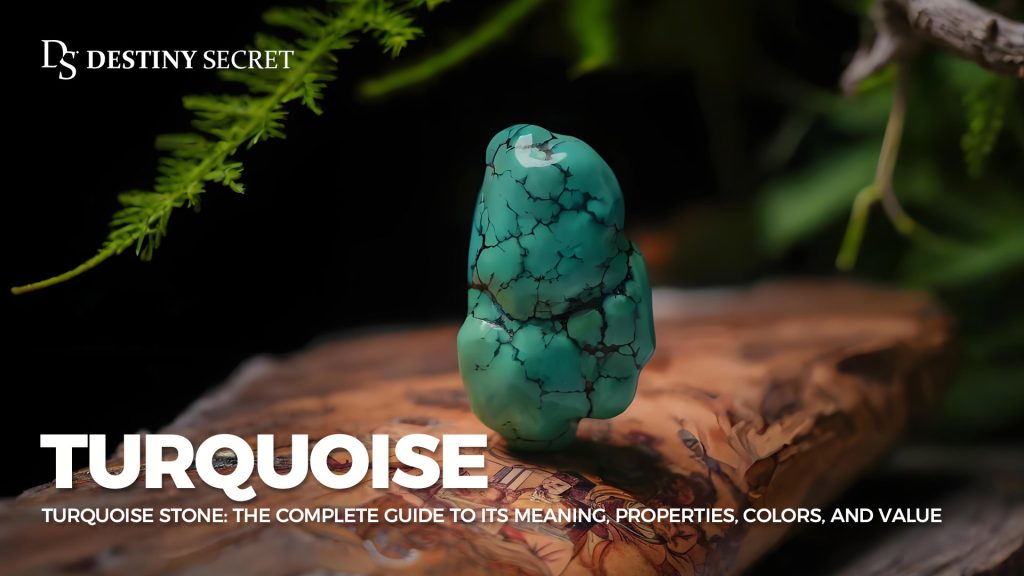
Imagine a color so distinctive, so captivating, that it was named after the gem itself. Turquoise—with its robin’s-egg blue and sky-blue hues—has fascinated humanity for over 6,000 years. Ancient Egyptian pharaohs were buried with turquoise-adorned treasures. Persian rulers wore it as a talisman against unnatural death. Native American peoples have revered it as a sacred stone connecting earth and sky. And across the Atlantic, the Aztecs valued it more than gold.
Few gemstones on Earth carry such a rich, cross-cultural legacy. Turquoise isn’t just a beautiful stone; it’s a piece of human history, a symbol of protection, and a timeless expression of art and spirituality.
But what exactly is this enigmatic gem? Where does its signature blue come from? Why has it been treasured by civilizations that never had contact with one another? And perhaps most importantly for you—how do you choose a genuine piece and care for it properly?
In this complete guide, we’ll answer all these questions and more. You’ll discover the science behind turquoise, explore its stunning range of colors, uncover its profound symbolism across cultures, learn what determines its value, and gain practical knowledge for identifying authentic stones. By the end, you’ll understand why turquoise remains one of the world’s most cherished gemstones.
Table of Contents
What Is Turquoise Stone?
The Colors of Turquoise: From Sky Blue to Apple Green
The Meaning and Symbolism of Turquoise Across Cultures
The Properties of Turquoise: Physical and Energetic
Turquoise Value, Quality, and How to Identify Genuine Stone
Where Is Turquoise Found? A Guide to Major Sources
How to Care for Your Turquoise Jewelry
Frequently Asked Questions About Turquoise Stone
Research and References
Conclusion: The Timeless Allure of Turquoise
Explore Our Turquoise Bracelets
1. What Is Turquoise Stone?
Turquoise is one of the oldest known gemstones, prized by civilizations across the globe for millennia. But scientifically speaking, what is it?
The Science of Turquoise
Chemically, turquoise is a hydrous phosphate of copper and aluminum, with the formula CuAl₆(PO₄)₄(OH)₈·4H₂O. It forms in arid regions where copper-rich groundwater seeps downward and reacts with minerals containing phosphorus and aluminum. Over thousands of years, this process creates veins and nodules of turquoise within fractured rock.
Unlike transparent gems such as diamonds or rubies, turquoise is typically opaque, with a waxy to subvitreous luster when polished. It ranks 5 to 6 on the Mohs hardness scale—softer than quartz but durable enough for jewelry when properly cared for.
A Mineral Family, Not Just One Stone
Interestingly, turquoise belongs to a small group of related minerals. The turquoise group includes five members: turquoise itself, aheylite, chalcosiderite, faustite, and planerite. They share similar crystal structures but have slight variations in chemical composition. This means that some material sold as turquoise might actually be another mineral from the same family—still natural, but technically different.
Why the Name "Turquoise"?
The name has a fascinating origin. It comes from the French pierre turquois, meaning “Turkish stone.” This wasn’t because Turkey produced turquoise, but because the gem first reached Europe through Turkish markets. The stones themselves originated primarily from Persia (modern-day Iran). So, the name is based on a centuries-old misunderstanding—yet it has stuck, becoming one of the most recognizable gem names in the world.
Is Turquoise a Precious Stone?
In traditional gemology, “precious stones” typically refer to diamonds, rubies, sapphires, and emeralds. Turquoise is technically classified as a semi-precious gemstone. However, this classification does a disservice to its historical and cultural significance. Fine-quality turquoise has been valued as highly as any precious stone by countless civilizations. The Aztecs, for instance, valued their turquoise more than the Spaniards valued gold and emerald. In terms of cultural importance, turquoise stands alongside the most treasured materials in human history.
2. The Colors of Turquoise: From Sky Blue to Apple Green
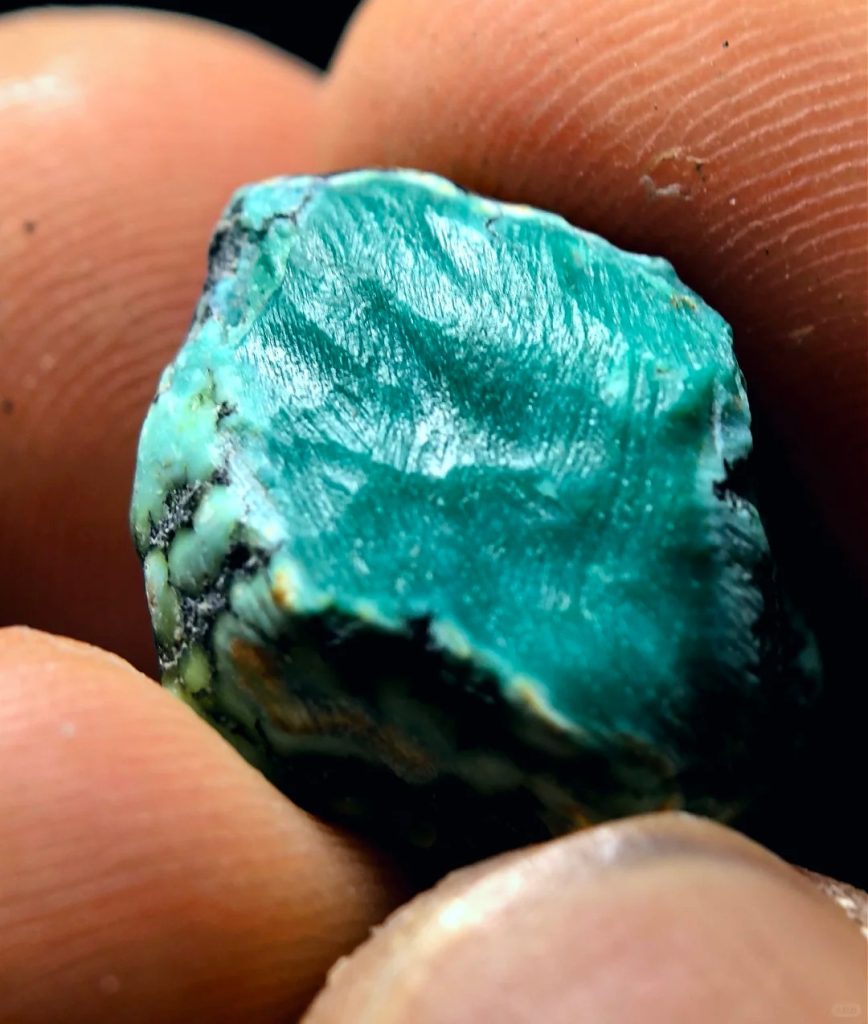
Blue minerals are rare in nature, which partly explains turquoise’s enduring appeal. But turquoise isn’t just blue—it spans a beautiful spectrum of hues.
What Causes Turquoise's Color?
The signature blue of turquoise comes from copper. When copper is present in the chemical structure, it produces the vivid blues that collectors prize. If iron substitutes for some of the aluminum, the stone takes on greenish tones. The more iron present, the greener the stone becomes.
The Most Sought-After Colors
Sky Blue or Robin’s-Egg Blue is universally considered the most desirable color. In the trade, you’ll often hear this referred to as “Persian Blue,” named after the high-quality turquoise from Iran. Stones of this color command the highest prices.
Blue-Green varieties are next in preference. These stones retain the beauty of turquoise but have a slightly warmer, more earthy quality.
Green and Yellowish-Green turquoise is less valuable but still beautiful. Some people specifically seek out green turquoise for its natural, organic feel.
Understanding Matrix: The Spiderweb Effect
Many turquoise stones contain veins or patches of their host rock, called matrix. This matrix can be black (from limonite), brown, or tan (from sandstone). Some cutters try to avoid matrix entirely, but when it forms thin, delicate, web-like patterns across the stone, it creates a highly desirable effect known as spiderweb turquoise.
The presence of matrix typically lowers the stone’s value, but spiderweb turquoise is an exception. Its intricate patterns provide a beautiful contrast to the blue, and many collectors specifically seek it out.
Famous Turquoise Colors from Specific Mines
Experienced collectors can often identify a stone’s origin by its characteristic color and matrix:
Sleeping Beauty Mine (Arizona) : Known for its pure, light sky-blue turquoise with little to no matrix.
Kingman Mine (Arizona) : Often produces bright blue stones with a distinctive black spiderweb matrix.
Morenci Mine (Arizona) : Dark blue turquoise, sometimes with pyrite (fool’s gold) inclusions in the matrix.
Bisbee Mine (Arizona) : Bright blue with a characteristic chocolate-brown matrix.
Nishapur (Iran) : The classic source of the finest sky-blue, “Persian blue” turquoise.
3. The Meaning and Symbolism of Turquoise Across Cultures
Perhaps no other gemstone carries such rich and varied symbolism across so many different cultures. Turquoise has been revered on nearly every continent, often independently, suggesting something universal about its appeal.
Ancient Egypt: The Stone of Joy
The ancient Egyptians were mining turquoise in the Sinai Peninsula as early as 4000 BC. They called it “mefkat,” which also meant “joy” and “delight.” Turquoise adorned the treasures of pharaohs, most famously the burial mask of Tutankhamun. For the Egyptians, turquoise represented not just beauty but divine protection for the afterlife.
Persia: Protection Against Doom
In ancient Persia (modern-day Iran), turquoise was worn around the neck or wrist as protection against unnatural death. If the stone changed color, the wearer was thought to have reason to fear approaching danger. This belief persisted for centuries, and Persian turquoise—particularly from the Nishapur region—became the world standard for quality.
The Aztecs and Mesoamerica: More Valuable Than Gold
When Spanish conquistadors arrived in Mexico, they made a startling observation: the Aztecs valued their turquoise more than the Spaniards valued gold and emerald. The Aztecs believed their god Quetzalcoatl taught them the art of cutting and polishing this stone. Aztec chiefs wore strings of turquoise around their wrists as badges of distinction. Elaborate turquoise mosaics, masks, and shields were created for ceremonial use, many of which survive today as masterpieces of pre-Columbian art.
Native American Southwest: Sacred Stone of the Earth and Sky
For the Navajo, Zuni, Hopi, and Apache peoples, turquoise holds deep spiritual significance. The Apache believed that if you could find the end of a rainbow after a storm, searching the damp earth would yield turquoise. The Navajo used ground turquoise and coral to create sacred sand mandalas to summon rain.
Turquoise symbolized the harmony between earth and sky—its blue representing the heavens, its green the earth. Shamans wore it for protection and healing. Warriors carried it into battle. To this day, turquoise and silver jewelry remains one of the most recognizable expressions of Native American art and identity.
Tibet and Asia: A Stone of Status and Spirituality
Tibetan culture has a profound connection to turquoise. It was considered a stone of status and was often incorporated into the most valuable family heirlooms passed down through generations. Turquoise was also used in religious ceremonies and as an offering in temples. In China, artisans carved turquoise into sacred figurines and amulets for over 3,000 years.
Universal Symbolism: Protection, Good Fortune, and Hope
Across these diverse cultures, common themes emerge. Turquoise has universally been regarded as:
A stone of protection – warding off evil, safeguarding warriors, and warning of danger.
A bringer of good fortune – attracting prosperity, success, and positive energy.
A symbol of hope – its cheerful sky-blue color representing optimism and the promise of a new day.
Modern Meaning: December Birthstone
In 1912, the American jewelry industry formally adopted turquoise as the modern birthstone for December. It’s also the traditional gift for the 11th wedding anniversary. So whether you’re celebrating a December birthday or a milestone anniversary, turquoise makes a meaningful and beautiful choice.
4. The Properties of Turquoise: Physical and Energetic
Physical Properties: Understanding Your Stone
Knowing the physical properties of turquoise helps you appreciate its unique character and care for it properly.
| Property | Value |
|---|---|
| Chemical Formula | CuAl₆(PO₄)₄(OH)₈·4H₂O |
| Mineral Class | Phosphate |
| Crystal System | Triclinic (rarely visible; typically microcrystalline) |
| Color | Sky blue, blue, blue-green, green, yellowish-green |
| Streak | Pale greenish blue to white |
| Luster | Waxy to subvitreous (glassy) when polished |
| Transparency | Opaque |
| Mohs Hardness | 5 to 6 |
| Specific Gravity | 2.6 to 2.8 |
| Fracture | Conchoidal to uneven |
Porosity and Texture: Turquoise varies in porosity depending on how tightly its microscopic crystals are packed. Fine-textured turquoise with low porosity polishes to an attractive waxy luster and is more durable. Coarse-textured turquoise is more porous, has a duller luster, and requires stabilization to be suitable for jewelry.
Energetic Properties: Traditional Beliefs and Crystal Healing
While not scientifically proven, turquoise has been credited with various energetic properties for thousands of years. Understanding these traditions adds depth to your appreciation of the stone.
Chakra Associations:
Throat Chakra: Turquoise is strongly associated with communication, self-expression, and speaking one’s truth. Its blue energy promotes clear, honest communication.
Heart Chakra: The greenish varieties connect to the heart chakra, promoting emotional balance and compassion.
Emotional and Spiritual Benefits (Traditional Beliefs):
Protection: Turquoise is believed to absorb negative energies and protect the wearer from harm. Some traditions hold that turquoise can break to warn its owner of danger, taking the injury in their place.
Healing: Native American shamans used turquoise in healing rituals. It was thought to strengthen the entire body and promote physical well-being.
Balance and Harmony: The stone is believed to balance emotions, calm the mind, and bring peace to the wearer.
Wisdom and Clarity: Turquoise is said to enhance wisdom, trust, and kindness. It helps clear the mind for better decision-making.
Modern Perspective: At Destiny Secret, we’ve heard from many customers who feel a genuine sense of peace, protection, or connection when wearing their turquoise pieces. Whether these feelings come from the stone itself, the power of intention, or simply the beauty of the gem, the experience is real and meaningful to each individual.


5. Turquoise Value, Quality, and How to Identify Genuine Stone
What Determines Turquoise Value?
Several factors influence the value of turquoise, with the finest pieces commanding premium prices.
1. Color
Color is the most important factor. The most valuable turquoise exhibits a vivid, even, medium-toned sky blue—the classic “Persian blue.” Stones should be free of gray or brown undertones. After blue, blue-green is preferred, with green and yellowish-green being less valuable.
2. Texture and Porosity
Fine-textured, low-porosity turquoise is more valuable. It polishes beautifully, takes a high luster, and is durable enough for everyday wear. Coarse, porous stones are usually treated to make them marketable.
3. Matrix
Generally, stones without matrix are most valuable. However, spiderweb turquoise with attractive, evenly distributed matrix patterns ranks second in value and is highly sought by collectors.
4. Origin
Turquoise from historically significant sources—like Nishapur (Iran), Sleeping Beauty (Arizona), or ancient Egyptian mines—often commands premium interest.
5. Treatment
Natural, untreated turquoise is the most prized. Treated stones (stabilized, dyed, or reconstituted) are common and more affordable but less valuable.
Turquoise Treatments: What You Need to Know
Most turquoise on the market today is treated in some way. This isn’t necessarily bad—treatment makes the stone durable enough for jewelry—but you should know what you’re buying.
Stabilized Turquoise: Porous turquoise is impregnated with a clear polymer resin under pressure. This hardens the stone, deepens its color, and makes it suitable for jewelry. Most modern turquoise is stabilized.
Dyed Turquoise: White stones (often howlite or magnesite) are dyed blue to imitate turquoise. This is not genuine turquoise and should be clearly labeled.
Reconstituted Turquoise: Low-quality turquoise or turquoise dust is crushed and mixed with resin to form solid blocks. This is then cut into “stones.”
Natural Turquoise: Completely untreated turquoise is rare and expensive. Most high-quality antique turquoise and pieces from top mines command premium prices.
How to Tell If Turquoise Is Real
This is the most common question about turquoise. While professional testing is the only way to be certain, here are some things to look for:
Visual Inspection:
Color: Be wary of unnaturally uniform, bright blue with no variation. Natural turquoise has subtle variations.
Matrix: Real spiderweb matrix is irregular and natural-looking. Imitations often have painted-on matrix that looks too perfect.
Surface: Look closely under magnification. Painted surfaces will show brush strokes or dots. Resin may have tiny bubbles.
Simple Tests:
Temperature Test: Real turquoise feels cool to the touch initially. Plastic imitations warm up quickly.
Scratch Test: Turquoise (hardness 5-6) cannot be scratched with a copper penny (hardness 3) but can be scratched with a knife blade (hardness 5.5). Be careful—this damages the stone!
Acetone Test: Rub a hidden area with a cotton swab dipped in acetone. If blue color transfers to the cotton, the stone is dyed. Test carefully on an inconspicuous spot.
The Most Important Rule: Buy from reputable sources. At Destiny Secret, every turquoise piece is carefully sourced from trusted suppliers who guarantee authenticity. We believe you should never have to wonder whether your stone is real.
6. Where Is Turquoise Found? A Guide to Major Sources
Turquoise deposits are found in limited locations worldwide, each producing stones with distinctive characteristics.
| Country/Region | Notable Mines/Deposits | Characteristics |
|---|---|---|
| Iran | Nishapur | The world’s finest sky-blue (“Persian blue”) turquoise. Historically the most prized source. |
| USA (Arizona) | Sleeping Beauty, Kingman, Morenci, Bisbee | Diverse colors from light sky blue (Sleeping Beauty) to dark blue with matrix (Kingman, Morenci, Bisbee). Major modern source. |
| USA (Nevada, New Mexico) | Various small mines | Known for unique colors and spiderweb patterns. New Mexico was leading producer until 1920s; Nevada until 1980s. |
| China | Hubei, Shanxi provinces | Significant modern producer. Chinese turquoise often has distinctive greenish tones. |
| Egypt | Sinai Peninsula | World’s oldest known mines (circa 4000 BC). Historically significant but now largely depleted. |
| Mexico | Various | Turquoise has been mined here for centuries, used by Aztecs and other pre-Columbian cultures. |
| Tibet / China | Tibetan Plateau | Highly prized in Tibetan culture. Often greener in tone. |
| Other Sources | Afghanistan, Australia, Chile, Russia | Smaller deposits, some producing fine-quality material. |
7. How to Care for Your Turquoise Jewelry
Turquoise is relatively soft and porous, requiring special care to maintain its beauty. Follow these guidelines to keep your turquoise pieces looking their best for generations.
Do’s and Don’ts of Turquoise Care
✅ DO:
Clean gently with a soft, damp cloth. Use mild soap only if necessary, then wipe with a clean damp cloth and dry thoroughly.
Store separately in a fabric-lined jewelry box or soft pouch to prevent scratching by harder gems.
Remove jewelry before applying perfumes, lotions, hairsprays, or cosmetics.
Take off turquoise rings and bracelets before washing hands, swimming, showering, or doing housework.
Protect from heat and prolonged direct sunlight, which can cause color fading or cracking.
❌ DON’T:
Never use ultrasonic or steam cleaners – these can damage or crack turquoise.
Avoid harsh chemicals – including bleach, ammonia, and jewelry cleaning solutions.
Don’t soak turquoise in water or any liquid.
Avoid prolonged perspiration – body oils and sweat can penetrate porous stones over time.
Don’t expose to extreme heat or sudden temperature changes.
Special Considerations
Wear with care: Because turquoise is softer than many gems, avoid wearing it during activities that might cause impact or abrasion.
Check settings: Periodically check prongs and bezels to ensure your stone is secure.
Re-oiling: Some collectors apply a tiny amount of mineral oil to dry turquoise to restore luster, but this should be done sparingly and only by those experienced with gem care.
8. Frequently Asked Questions About Turquoise Stone
What is turquoise stone good for?
Traditionally, turquoise is good for protection, good fortune, healing, and emotional balance. Practically, it’s a beautiful gemstone for jewelry and adornment.
What color is turquoise stone?
Turquoise ranges from sky blue to blue-green, green, and yellowish-green. The most desirable color is a vivid, even sky blue often called “Persian blue.”
Is turquoise a precious stone?
Technically, turquoise is classified as a semi-precious gemstone. However, its historical and cultural significance places it among the most valued gem materials in human history.
How can you tell if turquoise is real?
Look for natural color variation, test with acetone (dyed stones will bleed color), check temperature (real stone feels cool), and examine matrix patterns (natural matrix is irregular). Buy from reputable sources.
How much is turquoise stone worth?
Turquoise value varies enormously. Common stabilized turquoise can be affordable, while fine natural turquoise from top sources can command high prices. Value depends on color, texture, matrix, origin, and treatment.
Where is turquoise stone found?
Major sources include Iran, USA (Arizona, Nevada, New Mexico), China, Egypt, Mexico, and Tibet. Each location produces stones with characteristic colors and patterns.
What does turquoise stone symbolize?
Turquoise symbolizes protection, good fortune, hope, wisdom, and harmony between earth and sky. It has been revered across cultures for millennia.
Is turquoise a birthstone?
Yes, turquoise is one of the modern birthstones for December.
How do you clean turquoise jewelry?
Clean gently with a soft, damp cloth. Dry thoroughly. Never use ultrasonic cleaners, steamers, or harsh chemicals.
What is spiderweb turquoise?
Spiderweb turquoise contains thin, delicate, web-like matrix patterns across the face of the stone. These patterns provide a beautiful contrast to the blue and are highly sought by collectors.
9. Research and References
This guide draws upon multiple authoritative sources in the fields of gemology, mineralogy, and cultural history:
Gemological Institute of America (GIA). “Turquoise.” GIA Gem Encyclopedia, 2023.
Mindat.org. “Turquoise: Mineral Information, Data and Localities.” 2023.
International Gem Society (IGS). “Turquoise Symbolism.” 2023.
Geology.com. “Turquoise: A Gemstone That Has Been Treasured for Thousands of Years.” Hobart M. King, PhD.
Prins & Prins Diamonds. “Turquoise: The Timeless Blue Gem of Royalty, Culture, and Craftsmanship.” 2025.
RENÉSIM. “Turquoise | Gemstone Lexicon.” 2023.
TheFreeDictionary.com. “Turquoise (color).” Encyclopedia article by TheFreeDictionary.
American Museum of Natural History. “The Aztec Empire and Turquoise.” Exhibition Notes, 2021.
Smithsonian National Museum of Natural History. “Native American Jewelry and Turquoise.” Collection Guide, 2022.
British Museum. “Turquoise in Ancient Egypt.” Research Publication, 2023.
10. Conclusion: The Timeless Allure of Turquoise
As we’ve discovered, turquoise is far more than just a beautiful blue stone. It’s a gem with one of the longest and richest histories of any ornamental material on Earth. From the tombs of ancient Egyptian pharaohs to the sacred ceremonies of Native American peoples, from the royal courts of Persia to the vibrant markets of Tibet, turquoise has been cherished, traded, and revered for over six millennia.
Its appeal is universal and timeless. The sky-blue color—rare in nature—captures something essential in the human spirit. Its variations, from pure robin’s-egg blue to earthy greens, from clean surfaces to intricate spiderweb patterns, offer something for every taste. Its symbolism—protection, good fortune, hope, and harmony—speaks to desires we all share. And its physical presence, cool to the touch yet warm with meaning, connects us to cultures and traditions far removed from our own.
Whether you’re drawn to turquoise as your December birthstone, as a meaningful gift for an 11th anniversary, or simply because its beauty speaks to you, you’re participating in a tradition that spans continents and millennia. The next time you hold a piece of turquoise, you’re not just holding a stone—you’re holding a piece of human history, a talisman of protection, and a symbol of hope that has brightened lives for over 6,000 years.
11. Explore Our Turquoise Bracelets
If this guide has deepened your appreciation for turquoise, you might be interested in experiencing its beauty and meaning firsthand. At Destiny Secret, we carry a carefully curated selection of genuine turquoise bracelets, each piece chosen for its quality, character, and connection to this remarkable gem’s legacy.
From classic sky-blue stones to unique spiderweb patterns, from sterling silver settings to warm gold accents, our collection honors the timeless beauty of turquoise while offering styles for every taste. Each bracelet is handcrafted, continuing the traditions that have made turquoise beloved for millennia.
Visit our Turquoise Bracelets page to explore the collection. Whether you’re looking for a meaningful birthstone gift, an anniversary present, or a personal treasure to carry with you, you’ll find pieces that capture the enduring magic of the stone of protection and hope.

