
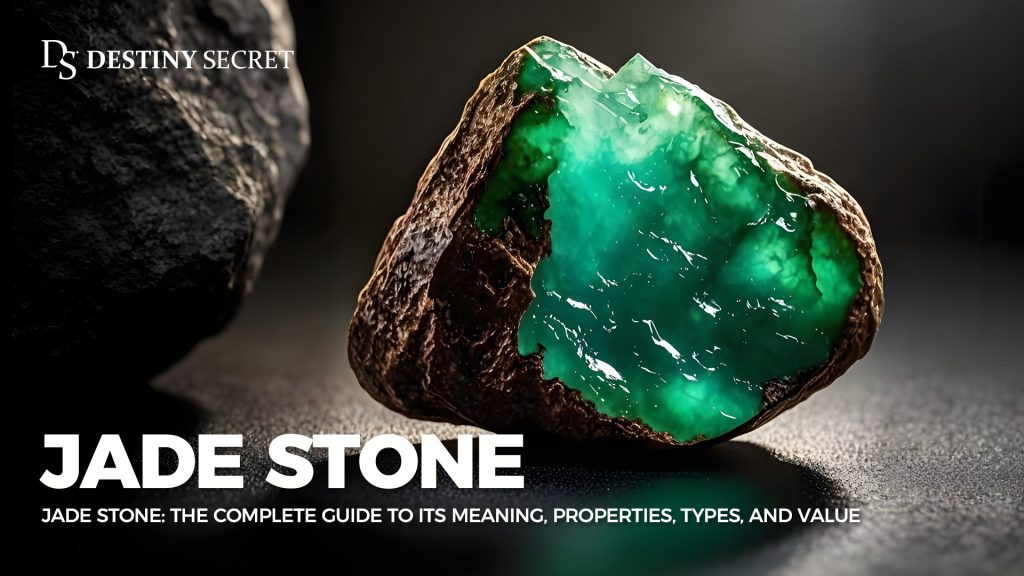
For thousands of years, few gemstones have captivated humanity quite like jade. In ancient China, it was revered as the “Stone of Heaven,” prized above gold and silver. The Maya and Aztec civilizations valued it more than gold for its spiritual significance. Even today, jade continues to fascinate collectors, jewelry lovers, and spiritual seekers alike.
But what exactly makes this stone so special? Is it the rich green hues that range from pale mint to deep forest? The incredible toughness that allows it to be carved into intricate shapes? Or perhaps the centuries of meaning and symbolism attached to every piece?
The truth is, jade is all of these things and more. Whether you’ve just discovered this beautiful gemstone, inherited a piece of jade jewelry, or are simply curious about its reputation, you’ve come to the right place.
In this complete guide, we’ll walk you through everything you need to know about jade stone. You’ll discover what jade actually is (you might be surprised to learn it’s not just one mineral), explore the stunning variety of colors it comes in, understand the deep meaning and benefits associated with it, and learn what determines its value. By the end, you’ll have a newfound appreciation for this timeless treasure.
Table of Contents
What Is Jade Stone?
Exploring the Colors of Jade Stone
The Meaning and Benefits of Jade Stone
The Physical and Energetic Properties of Jade
Jade Stone Value, Origin, and How to Identify It
Frequently Asked Questions About Jade Stone
Research and References
Conclusion: The Timeless Beauty of Jade
Explore Our Jade Bracelets
1. What Is Jade Stone?
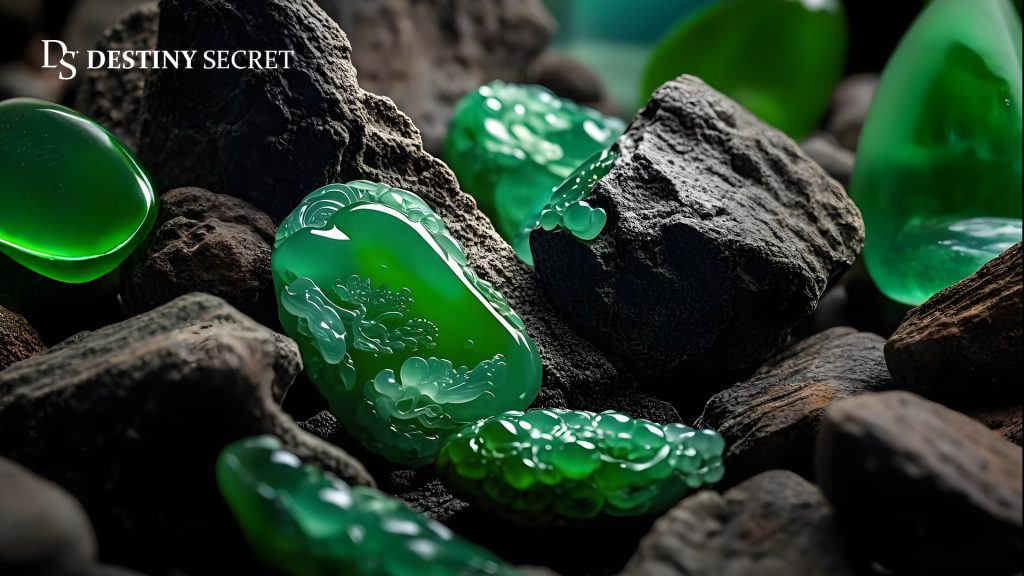
When people talk about “jade,” they’re actually referring to one of two distinct minerals: jadeite or nephrite. For most of history, this distinction didn’t exist—both were simply called jade. But in 1863, a French mineralogist discovered that what was being called jade was actually two different materials with similar properties.
Jadeite: The Rarer and More Precious Jade
Jadeite is the rarer of the two types and, consequently, often more valuable. It’s found in fewer locations worldwide, with Myanmar (formerly Burma) being the most significant source. Imperial jade—the most prized variety with its intense emerald-green color—is actually jadeite.
What makes jadeite special is its wider range of colors and its glass-like translucency when of the highest quality. The finest jadeite can command prices higher than diamonds, which explains why it’s often asked whether jade is a precious stone. In the world of gemology, jadeite is indeed classified among the most precious materials.
Nephrite: The Classic Jade
Nephrite is what most people traditionally think of as jade. It’s been carved in China for over 5,000 years and was the only jade known there until jadeite imports from Burma began in the 18th century. Nephrite is slightly more common than jadeite, though fine quality is still highly prized.
Nephrite has a distinctly different appearance from jadeite. It’s typically more fibrous in structure, giving it a slightly softer, more “silky” appearance. Colors range from creamy white (known as “mutton fat” jade in China) through various shades of green to deep spinach green and even black.
So, Is Jade a Precious Stone?
This is one of the most common questions people ask. The answer is nuanced. In the strict gemological sense, “precious stones” traditionally refer to diamonds, rubies, sapphires, and emeralds. Jade doesn’t belong to this category.
However, in cultural and historical terms, jade has been valued as highly as—or even higher than—any precious stone. In Chinese culture, jade has always been considered the most valuable of all materials. The imperial courts prized it above gold and silver. So while it may not fit the technical definition, jade’s cultural value places it firmly in the “precious” category for millions of people worldwide.
2. Exploring the Colors of Jade Stone
One of the most beautiful aspects of jade is its remarkable range of colors. While green is what most people imagine, jade actually comes in a rainbow of hues. Here’s a guide to the most common and sought-after jade colors.
Green Jade: The Classic Beauty
Green is the color most associated with jade, and it comes in an astonishing variety of shades. At the top end is Imperial Green—an intense, vibrant emerald-green that’s almost translucent. This color is exclusive to jadeite and represents the pinnacle of jade quality.
Moving down the scale, you’ll find apple green (a brighter, slightly yellower green), moss green (deeper with subtle gray undertones), and olive green (earthy and warm). Each shade has its own character and appeal.
In nephrite, the greens tend to be more muted. The classic spinach green is dark with a slightly oily appearance, while light green nephrite has a soft, almost creamy quality.
White Jade: Purity and Elegance
White jade—particularly nephrite—holds special significance in Chinese culture. The finest quality is called “mutton fat” jade because of its creamy, white appearance that resembles cooked lamb fat. This might not sound appealing, but the visual effect is actually stunning: a warm, translucent white with a soft, oily luster.
White jadeite is also prized, particularly when it has a faint lavender or green tint. Pure white jadeite with good translucency is rare and valuable.
Black Jade: Mystery and Protection
Black jade is less common but increasingly popular. True black jade (usually nephrite) should be completely opaque and uniformly dark. In good light, you might see a faint greenish undertone. Black jadeite also exists but is rarer.
Many people are drawn to black jade for its grounding, protective qualities—which we’ll explore more in the next section.
Yellow and Brown Jade: Warmth and Earthiness
Yellow jade is relatively rare and highly prized, especially in Chinese culture where yellow has imperial associations. The color ranges from pale lemon to rich honey gold. Brown jade (sometimes called “tiger skin” jade when patterned) has an earthy, warm quality that’s unique among jade varieties.
Lavender Jade: Delicate and Rare
Lavender jade is almost exclusively jadeite and is one of the most sought-after colors. The shade can range from pale, almost white lilac to a deeper, richer lavender. The best lavender jade combines this delicate color with good translucency, creating a truly ethereal appearance.
Red Jade: The Rarest of All
True red jade is exceptionally rare. Most “red jade” on the market is actually jade that has been stained or is a different material altogether. Natural red jade gets its color from iron oxide inclusions and ranges from orange-red to deeper, brick-like reds. Because of its rarity, red jade commands premium prices when genuine.
Blue Jade: The Collector's Dream
Blue jade exists but is extremely rare. Most blue-green jade you’ll see is actually more green with blue undertones rather than true blue. Authentic blue jadeite is a collector’s item and rarely appears on the open market.
3. The Meaning and Benefits of Jade Stone
For centuries, jade has been more than just a beautiful material—it has been a stone of profound meaning and significance. Understanding these traditional beliefs adds another dimension to appreciating this remarkable gem.
The Core Meaning of Jade
In Chinese philosophy, jade represents the five cardinal virtues:
Benevolence – its smooth, warm surface
Wisdom – its quiet, steady presence
Justice – its sharp edges that don’t cut
Courage – its ability to be broken but never bent
Purity – its clear, translucent quality when held to light
This connection between jade’s physical qualities and moral virtues explains why it has been treasured for so long. Wearing jade wasn’t just about adornment—it was about reminding oneself of these ideals.
Jade Stone Benefits: Emotional and Spiritual
Many people turn to jade for its reputed emotional and spiritual benefits. While these aren’t scientifically proven, the traditions behind them are worth understanding.
Good luck and prosperity is perhaps the most common association. Jade has long been considered a lucky stone, attracting abundance and good fortune. This is why you’ll often see jade figurines in businesses and homes, particularly in Asian cultures.
Protection is another traditional benefit. Warriors in ancient times would carry jade talismans into battle, believing the stone would protect them from harm. Today, many people wear jade for its protective qualities, viewing it as a shield against negative energies.
Harmony and balance are central to jade’s meaning. The stone is thought to promote emotional equilibrium, helping its wearer remain calm and centered even in difficult situations. It’s sometimes called the “dream stone” because of its reputed ability to bring insightful dreams and promote restful sleep.
Green Jade Stone Meaning
Green jade, being the most common, has its own layer of meaning. It’s associated with the heart chakra, making it a stone of love, compassion, and forgiveness. The deep green color connects to nature and growth, symbolizing renewal and vitality.
White Jade Stone Meaning
White jade represents purity and clarity. It’s thought to clear the mind, sharpen decision-making, and provide spiritual protection. In Chinese culture, white jade is often given to young people as they embark on new journeys in life.
Black Jade Stone Meaning
Black jade is the stone of protection and grounding. It’s believed to absorb negative energy, provide strength during difficult times, and help its wearer stay rooted in reality. For those drawn to darker stones, black jade offers a powerful, stabilizing presence.
Yellow Jade Stone Meaning
Yellow jade connects to the solar plexus chakra and is associated with personal power, confidence, and success. It’s considered especially lucky for those in business or creative pursuits.
Does Jade Really Work?
This is a personal question. For many who wear jade, the benefits are real—not necessarily because of any mystical property of the stone itself, but because of what it represents and how it makes them feel. If wearing a piece of jade reminds you to stay calm, centered, and optimistic, then in a very real sense, it’s working.
At Destiny Secret, we’ve heard countless stories from customers who feel a genuine connection to their jade pieces. Whether it’s the beauty, the tradition, or something more, there’s no denying that jade has a special presence.
4. The Physical and Energetic Properties of Jade
Beyond its beauty and meaning, jade possesses remarkable physical properties that have made it valuable for both practical and decorative purposes throughout history.
Physical Properties: Toughness and Durability
One of the most impressive things about jade is its incredible toughness. While many gemstones can be brittle and chip easily, jade is exceptionally durable. In fact, nephrite is one of the toughest minerals on Earth—it’s stronger than steel in some respects.
This toughness comes from the interlocking fibrous structure of both jadeite and nephrite. Think of it like a piece of felt versus a pane of glass. Glass can shatter, but felt resists tearing because of its fibrous nature. Jade is similar, which is why ancient cultures could carve it into intricate shapes and use it for tools and weapons.
On the Mohs scale of hardness, jadeite ranges from 6.5 to 7, while nephrite is slightly softer at 6 to 6.5. This makes both suitable for everyday wear in jewelry, though they can still be scratched by harder materials like quartz.
Energetic Properties: The "Stone of Heaven"
The energetic properties attributed to jade stem largely from its physical characteristics. Its cool, smooth surface when first touched gradually warms to body heat—a quality that ancient observers saw as symbolic of patience and virtue.
Traditional Chinese medicine has used jade for thousands of years. Small jade rollers were (and still are) used for facial massage, believed to improve circulation and promote youthful skin. Jade was also ground into powders and elixirs, though this practice has largely faded.
In crystal healing traditions, jade is associated with:
Heart chakra (especially green jade) – promoting love, compassion, and emotional healing
Third eye chakra (lavender and white jade) – enhancing intuition and spiritual insight
Root chakra (black jade) – grounding and stabilizing energy
These associations aren’t scientifically verified, but for those who work with crystal energies, jade remains one of the most respected stones.
Why Does Jade Feel Cold?
Have you ever noticed that jade feels cool to the touch? This is simply because stone conducts heat away from your skin faster than air does. The same reason a marble countertop feels cold. Once jade reaches body temperature, it feels warm and comfortable against the skin—a quality many people find soothing.
5. Jade Stone Value, Origin, and How to Identify It
Understanding what makes jade valuable, where it comes from, and how to tell real from fake is essential knowledge for anyone interested in owning this beautiful stone.
What Determines Jade Stone Value?
Several factors influence jade’s value, with the finest pieces commanding extraordinary prices. In fact, the most expensive jade ever sold—a necklace of 27 imperial jadeite beads—went for over $27 million at auction.
Color is the most important factor. For green jade, the ideal is a vivid, even color with no gray or brown undertones. The most prized is “Imperial Green”—an intense emerald hue with exceptional translucency. For other colors, intensity and evenness are key.
Transparency dramatically affects value. The finest jade is semi-transparent, allowing light to penetrate and creating a soft, glowing appearance. Opaque jade is less valuable, though certain types (like some black jade) are naturally opaque.
Texture refers to how fine-grained the stone is. The best jade has a smooth, almost waxy texture with no visible grain. Coarser textures with visible fibers or inclusions are less desirable.
Color consistency matters too. The most valuable jade has uniform color throughout. Patches or streaks of different colors generally reduce value, though there are exceptions where contrasting colors create interesting patterns.
Where Is Jade Stone Found?
Jade deposits exist around the world, each producing material with distinct characteristics.
Myanmar (Burma) is the source of virtually all jadeite on the market. The mines in northern Myanmar have produced the world’s finest jade for centuries, including the legendary Imperial jade. Burmese jadeite comes in the widest range of colors and the highest qualities.
China has produced nephrite for millennia. The famous Hetian (or Hotan) jade from Xinjiang province is considered the finest nephrite, particularly the white “mutton fat” variety. Chinese nephrite tends to have a warm, creamy quality distinct from other sources.
New Zealand nephrite, known to the Māori as pounamu, is treasured both by New Zealanders and internationally. It’s typically deep green to almost black, often with beautiful patterns. New Zealand strictly controls the export of raw pounamu, adding to its special status.
Canada is a significant source of nephrite, particularly from British Columbia. Canadian nephrite ranges from light to dark green and is often more affordable than material from other sources.
Russia, Guatemala, and the United States (particularly California and Wyoming) also produce jade, though in smaller quantities.
How to Tell If Jade Is Real
This is perhaps the most common question about jade. While professional testing is the only way to be certain, here are some things to look for:
Temperature test: Real jade feels cool to the touch and warms slowly. Plastic and glass imitations often warm up more quickly.
Weight test: Jade is dense. A real jade piece should feel heavier than it looks. If it feels unusually light, it might be something else.
Sound test: When tapped gently, real jade produces a clear, ringing sound that lingers slightly. Imitations often produce a duller thud.
Surface inspection: Look closely at the surface. Real jade, even when polished, may have subtle variations and natural inclusions. Perfect uniformity can be a red flag.
The most reliable way to identify jade is through professional gemological testing. If you’re considering a significant purchase, always buy from reputable sources and request certification when appropriate.
At Destiny Secret, every jade piece is carefully sourced from trusted suppliers who guarantee authenticity. We believe you should never have to wonder whether your stone is real.
6. Frequently Asked Questions About Jade Stone
Is jade a precious stone?
In traditional gemology, jade isn’t classified with diamonds, rubies, sapphires, and emeralds. However, its cultural significance and value—particularly for fine jadeite—place it among the most precious materials in human history.
What color is jade stone?
Jade comes in many colors including green, white, black, yellow, lavender, orange, and occasionally red or blue. Green is most common, but each color has its own beauty and meaning.
How can you tell if jade is real?
Look for a cool temperature that warms slowly, a heavier-than-expected weight, a clear ringing sound when tapped, and natural variations in the stone. For certainty, seek professional testing.
How much is jade stone worth?
Jade value varies enormously. Common nephrite can cost just a few dollars per gram, while top-quality jadeite can sell for millions. Factors affecting value include color, transparency, texture, and origin.
Where is jade stone found?
Major sources include Myanmar (jadeite), China (nephrite), New Zealand (nephrite), Canada (nephrite), Russia, Guatemala, and the United States.
What does jade stone symbolize?
Jade traditionally symbolizes wisdom, justice, compassion, courage, and purity. It’s also associated with good luck, prosperity, and protection.
Is jade stone expensive?
Jade ranges from affordable to extraordinarily expensive. Fine jadeite commands higher prices than many gemstones, while nephrite from common sources remains accessible.
What is jade stone good for?
Traditionally, jade is good for promoting harmony, attracting good fortune, providing protection, and encouraging wisdom. Practically, it’s excellent for jewelry due to its durability.
7. Research and References
This guide draws upon multiple authoritative sources in the fields of gemology, mineralogy, and cultural history:
Gemological Institute of America (GIA). “Jadeite and Nephrite.” GIA Gem Encyclopedia, 2023.
Hughes, R.W. “Jadeite of Myanmar.” Asian Gemological Institute, 2022.
Laufer, B. “Jade: A Study in Chinese Archaeology and Religion.” Field Museum of Natural History, 1912 (reprint edition consulted).
Webster, R. “Gems: Their Sources, Descriptions and Identification.” 6th Edition, Butterworth-Heinemann, 2022.
British Museum. “Chinese Jade: A Historical Overview.” British Museum Research Publications, 2021.
New Zealand Government. “Pounamu: Management and Protection.” Ministry of Business, Innovation, and Employment, 2023.
Mineralogical Society of America. “The Mineralogy of Jade.” American Mineralogist, Volume 108, 2023.
8. Conclusion: The Timeless Beauty of Jade
As we’ve discovered, jade is far more than just a beautiful green stone. It’s a material with two distinct identities—jadeite and nephrite—each with its own character and value. It comes in a rainbow of colors, from the prized Imperial green to delicate lavender, warm yellow, and mysterious black. It carries centuries of meaning, symbolizing virtues that remain relevant today. And it possesses physical properties that made it valuable to ancient cultures and continue to make it desirable for modern jewelry.
Whether you’re drawn to jade for its beauty, its meaning, or simply its fascinating history, one thing is clear: this is a stone that has earned its place among the world’s most treasured materials. The next time you hold a piece of jade, you’re not just holding a stone—you’re holding a piece of human history, a connection to ancient traditions, and a symbol of timeless virtues.
9. Explore Our Jade Bracelets
If this guide has deepened your appreciation for jade, you might be interested in experiencing its beauty firsthand. At Destiny Secret, we carry a carefully curated selection of genuine jade bracelets, each piece chosen for its quality and character. From classic green jade to rare colors, our collection offers something for every admirer of this remarkable stone.
Visit our Jade Bracelets page to explore the collection. Each bracelet is crafted by hand, honoring the traditions that have made jade beloved for millennia. Whether you’re looking for a meaningful gift or a personal treasure, you’ll find pieces that capture the timeless beauty of the Stone of Heaven.