
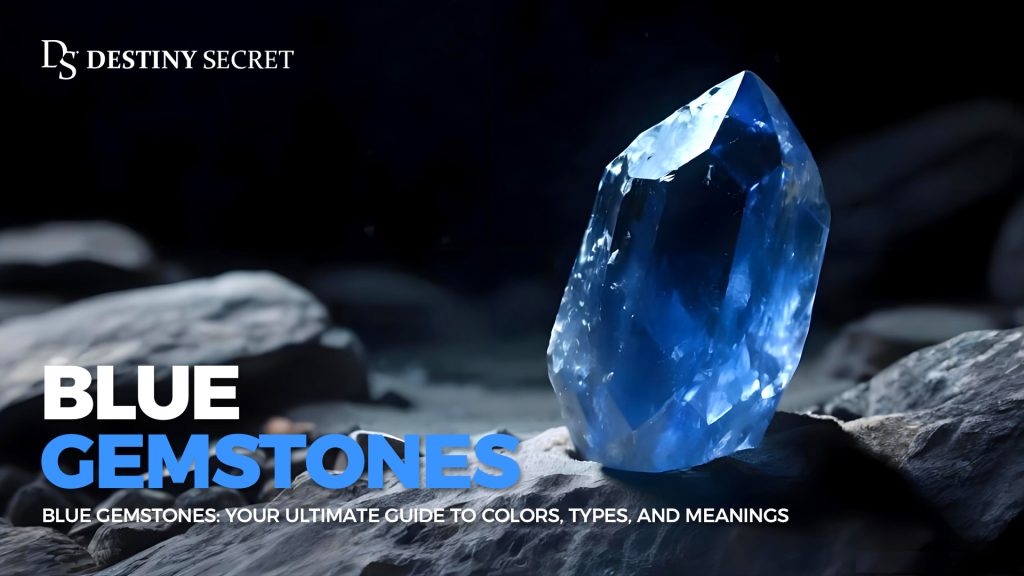
There’s a reason why gazing at the ocean or a clear sky stops us in our tracks. Blue is the color of depth, serenity, and profound inner knowing. For millennia, humanity has sought to capture this essence, finding it locked within the Earth as breathtaking blue gemstones.
These natural treasures are more than ornaments; they are fragments of our planet’s history, each with a unique story, energy, and spectrum of color. Whether you’re drawn to their beauty, their storied meanings, or the call of a particular hue, navigating the world of blue gems can be wondrous. This guide is your map, designed to help you discover not just a stone, but your stone.
Table of Contents
The Spectrum of Blue: A Guide by Color
Light & Pale Blue Gemstones: Serenity in Stone
Dark & Navy Blue Gemstones: Depth and Wisdom
Blue-Green & Teal Gemstones: Oceanic Harmony
Unique Blue Hues: Purple, Gray, and Multi-Colored Stones
How to Choose a Blue Gemstone That Resonates With You
Caring for Your Blue Gemstone Jewelry
Frequently Asked Questions (FAQ)
Research and References
Conclusion: Your Journey into Blue
Explore Handcrafted Gemstone Artistry
1. The Spectrum of Blue: A Guide by Color
When asking “what gemstones are blue?” the answer is a dazzling array. The most intuitive way to explore this family is through the language of color itself. From the airy whisper of a pale blue gemstone to the profound depth of a dark blue gemstone, each shade carries its own personality and hosts a unique cast of mineral characters. Think of this not as a simple list of blue gemstones, but as a curated gallery organized by hue.
2. Light & Pale Blue Gemstones: Serenity in Stone
Light blue gemstones (often interchangeable with pale blue gemstones in description) evoke clarity, calm, and open communication. They are like a breath of fresh air, crystalized.
Aquamarine: The namesake of seawater, this beryl variety is the quintessential light blue stone, symbolizing courage and soothing emotions.
Blue Topaz: Widely available in treated shades like Sky Blue and Swiss Blue, it’s associated with joy and articulate expression.
Angelite: A gentle, pale blue-gray stone said to promote compassion and connection.
Blue Chalcedony: Exhibiting a soft, waxy luster, it’s known as a stone of camaraderie and calming worry.
Blue Moonstone: Prized for its adularescence—a floating blue light—it’s linked to intuition and new beginnings.
Celestite: Often in delicate crystal formations, its heavenly blue hue connects to peace and spiritual awareness.
Pale Sapphire: Even the mighty sapphire can occur in delicate, pastel blues, offering wisdom in a gentler package.
Blue Apatite: Can appear in clear, light blue shades, known for stimulating creativity and clarity of thought.
Larimar: A rare pectolite found only in the Dominican Republic, its white and light blue patterns resemble ocean waves.
3. Dark & Navy Blue Gemstones: Depth and Wisdom
The domain of dark blue gemstones speaks of royalty, introspection, and inner strength. Navy blue gemstone and deep blue gemstone varieties feel timeless and anchored.
Sapphire: The classic dark blue gemstone, especially in royal blue or cornflower shades. It epitomizes wisdom, virtue, and nobility.
Lapis Lazuli: An opaque rock flecked with golden pyrite, its deep celestial blue has been prized since antiquity for truth and self-awareness.
Sodalite: A rich navy blue gemstone, often with white calcite veins. It’s considered a stone of logic, rationality, and group harmony.
Azurite: An intense, deep azure mineral that often forms with malachite. It’s associated with insight and psychic development.
Kyanite: Forms in unique, blade-like crystals and requires no polishing to showcase its deep blue color. It’s known for aligning all chakras.
Indicolite Tourmaline: The blue variety of tourmaline, ranging from light to very dark blue, valued for its spiritual grounding properties.
Danburite: While often clear, it can occur in a light to medium blue, known as a stone of joy and spiritual attunement.
4. Blue-Green & Teal Gemstones: Oceanic Harmony
Blue green gemstones capture the dynamic energy where sea meets sky. This teal gemstone category is vibrant, balancing, and full of life.
Turquoise: Perhaps the most iconic blue green gemstone, revered across cultures for protection, luck, and healing.
Amazonite: A soothing green-blue feldspar, likened to tropical waters, said to soothe emotional trauma.
Apatite: Often found in a striking neon blue-green hue, it’s a stone of motivation and personal growth.
Paraíba Tourmaline: A rare and vivid electric blue-green tourmaline, one of the most coveted gems for its stunning color.
Chrysocolla: An opaque, greenish-blue stone often with darker veining, known as the “teacher stone” for its calming wisdom.
Aquamarine (Greenish Variants): Some aquamarines lean more towards a soft sea-green, blending the properties of both colors.
Gem Silica: The most precious form of chrysocolla, a stunning, translucent blue-green material.
5. Unique Blue Hues: Purple, Gray, and Multi-Colored Stones
Blue’s versatility shines in stones that blend with other tones or exhibit unique optical effects.
Blue Purple Gemstones:
Tanzanite: A stunning violet-blue zoisite, prized for its strong pleochroism (showing different colors from different angles).
Iolite: Known as “water sapphire,” it ranges from violet-blue to a lighter gray-blue and is a navigation stone for inner journeys.
Fluorite: Can form in beautiful bands of purple and blue, a stone of mental clarity and秩序.
Blue Gray & Blue White Gemstones:
Blue Tiger Eye: A silky, chatoyant stone displaying bands of blue, gray, and gold. It’s a stone of balance, protection, and practical insight.
Labradorite: While known for its multicolored flash (labradorescence), the base color is often a mysterious dark gray-blue.
Hematite: A metallic, gray stone with a high sheen, primarily known for grounding and protection.
Multi-Colored & Patterned Stones:
Larimar: (Also in light blue) Features captivating white and blue patterns.
Pietersite: Contains swirling patterns of blue, gold, and brown, known as the “tempest stone” for catalyzing change.
Sapphire (Parti-Colored): Some sapphires can be blue and yellow or blue and green in a single stone.
6. How to Choose a Blue Gemstone That Resonates With You
With this list of blue gemstones before you, how do you choose? Beyond the technical types of blue gemstones, consider this a personal journey.
Follow Your Gaze: Which section did your eyes linger on? Your innate attraction to a light, dark, or teal hue is often your intuition guiding you to the energy you need.
Connect with the Meaning: Are you seeking calm (aquamarine), truth (lapis), protection (turquoise), or balance (blue tiger eye)? Let the stone’s legacy be a starting point for your own intention.
Consider the Vessel: A stone for a daily-wear item like a bracelet needs durability. Sapphires and quartzes are hardy, while turquoise or lapis require more mindful care.
Embrace the Fingerprint of Nature: This is the heart of choosing a natural blue gemstone. Every genuine stone has unique inclusions, color zones, and textures—its birthmarks. This means no two are identical. When a piece is crafted by hand around such a unique stone, like the philosophy at Destiny Secret, it transcends being mere jewelry. It becomes a one-of-a-kind artifact, where the craftsman’s touch honors the stone’s natural story, making the final piece as unique as the person who wears it.
7. Caring for Your Blue Gemstone Jewelry
To preserve the beauty and energy of your stone:
Clean Gently: Use lukewarm water, mild soap, and a soft brush. Avoid harsh chemicals and ultrasonic cleaners for porous stones (turquoise, lapis) or those with fractures.
Store Separately: Keep pieces in soft pouches or fabric-lined compartments to prevent scratches.
Wear Mindfully: Remove jewelry before strenuous activity, swimming (chlorine/salt), or applying chemicals.
Frequently Asked Questions (FAQ)
Q: What is the most expensive blue gemstone?
A. Fine blue diamonds top the list, but certain sapphires (like from Kashmir) can also be exceptionally valuable due to rarity and color. However, “value” is personal; a perfectly matched blue green gemstone like a Paraíba tourmaline or a stunning larimar can hold immense worth to a collector.
Q: What’s the difference between light blue and pale blue gemstones?
A. In gemology and common usage, these terms are largely interchangeable to describe stones with a low saturation of blue color. You might see both used to describe stones like aquamarine or blue topaz.
Q: Is there a definitive list of all blue gemstones?
A. The mineral world is vast, with new discoveries and rare varieties. This guide covers the primary commercial and collectible types of blue gemstones. For a definitive scientific database, resources like Mindat.org are excellent.
Q: Are blue gemstones suitable for men’s jewelry?
A. Absolutely. Historically, stones like lapis lazuli and sapphire were worn by men as symbols of power and wisdom. Modern design focuses on the stone’s natural character—a substantial, raw dark blue gemstone set in clean, masculine lines can be profoundly powerful.
Research and References
To ensure accuracy, the information in this guide is synthesized from established gemological and mineralogical sources:
Gemological Institute of America (GIA): Their public Gem Encyclopedia is the industry standard for data on gem species, properties, and identification.
Mindat.org: The world’s largest public mineral database, managed by the Mineralogical Society of America and other institutions, provides authoritative data on mineral localities and properties.
Smithsonian Institution National Museum of Natural History: Their research and collection notes on gems and minerals provide invaluable historical and scientific context.
Geological Survey Publications: Various national geological surveys publish data on mineral occurrences and characteristics.
10. Conclusion: Your Journey into Blue
Our exploration through the world of blue gemstones reveals far more than a simple palette of colors. It uncovers a landscape of feeling, ancient symbolism, and profound personal connection. From the serene whisper of a pale blue gemstone to the grounding depth of a navy blue gemstone, each variety offers a unique key to understanding both the Earth’s artistry and our own inner depths.
We’ve journeyed through the primary types of blue gemstones, answering the core question of what gemstones are blue by organizing them into intuitive families of light, dark, teal, and unique hues. This guide serves as a starting point—a reference to return to as your curiosity grows.
Remember, the true journey begins when knowledge meets intuition. Let the colors that call to you guide your next step, whether it’s deeper research or the search for a stone you can hold in your hand.
11. Explore Handcrafted Gemstone Artistry
For those who feel called to not just know about this energy, but to hold it in a form that honors its origins, the journey continues. At Destiny Secret, our craft is the bridge between a raw, earthly treasure and its final form as a personal totem.
We begin with singular natural blue gemstones, each selected for its unique character. Through four generations of inherited skill, we handcraft pieces that respect the stone’s innate story. Our final, distinctive step is the process of Doubly-Infused Energy, ensuring the finished piece is more than an object—it’s an intentional companion, waiting to become part of your legacy.
Discover the difference in a piece made with this depth of intention. Explore our curated collection of Gemstone Bracelets, where each piece awaits its unique story with you.